Bitmap Books

Showing posts with label Capcom. Show all posts

Monday, 28 November 2022

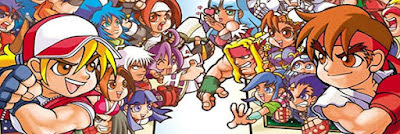
Neo Geo Pocket Color Selection Volume 2 Review (Switch)

Like the first Neo Geo Pocket Collection, Volume 2 brings another ten games to the Switch (Eleven if you count both versions of SNK VS. Capcom Card Fighters’ Clash). It means that around a quarter of all the games available on the system are now on Nintendo’s hybrid and we can only hope this continues. It also helps that there’s some really good games on here.

Like the first volume this collection brings together the individually released Pocket games from the year, compiles them and adds a host of others as well. We’ve had fewer individual releases this time around so it’s an enticing prospect even if you’ve already broken cover and purchased some of the games already.

Included are three sports games. Neogeo Cup 98 is an easily forgettable football game but the other two fare far better. Pocket Tennis is great and evokes memories of Super Tennis back on the SNES. We found ourselves losing far more time than we intended, and it works great for quick goes. Baseball Stars is also a lot of fun with each of the teams having unique stats and each area of the game being represented well. Both may not have warranted individual releases, but they are far more than just filler here.

There are two quirky games on here as well with The King of Fighters Battle De Paradise providing a sort of weird board game version of the game and the notoriously quirky Ganbare Neo Poke-Kun also here. Unfortunately, both games are in Japanese (though the manuals have been translated). Both games are confusing enough without having to fight through a foreign language as well. Ganbare in particular has a fair amount of text so you’ll need to keep going back an forth to know what is going on. The game itself has a weird creature developing mini games which you can then play, and you have to effect his environment to keep him awake. Yes, it’s very strange.

Biomotor Unitron adds a much-welcomed RPG to the collection though in truth it’s quite average. It’s a bit Pokémon like but instead of creatures you are collecting resources for your robot. It’s solid but we can’t see many people seeing it through to the end. The previously released Mega Man Battle and Fighters is also included, (and not translated from Japanese), which provides two games which are effectively a succession of boss battles in a kind of basic fighting game. It’s fun, but nothing amazing and without the license would likely be forgotten.

What is a wonderful surprise is Puzzle Link 2. On the surface it seems like a sort of Magical Drop or Puzzle Bobble clone but that is not the case. You do have to match colours, but you do this by connecting them with pipes that you throw up the screen. It’s a fresh and clever take on the genre and one you’ll lose a lot of time to. Who knew Pipemania crossed with Magical Drop was the game we all needed?

The remaining two games have both been released separately. Big Bang Pro Wrestling has proved to be a really nice surprise. We had never even heard of it but it’s now up there with SNK vs Capcom: Card Fighters Clash as our most played NGP game. It plays well, it’s inventive, the graphics and sound are satisfying, and it uses the control scheme the best you can possibly expect for the system. There’s also a wide range of characters and match types to pick from.

SNK Vs, Capcom Card Fighters’ Clash is of course the headline act here with both versions of the games included and the English and Japanese language versions of both those games as well. The card battles themselves are deceptively complex. Battles play on out on a table where players can lay a maximum of three cards down. When played, cards add whatever special points they have to the players total and also present a battle point value to attack and defend with. The special points then allow for things like dual attacking and launching special abilities. Once cards are down players can either attack with them or hold them back to defend. Once an action has been taken the card in question is then frozen. This is important as you must weigh up how likely you are to be able to defend against incoming attacks and if an all-out strike by your team is worth leaving yourself defenceless for.

The key here is that you aren’t trying to eliminate all your opponent’s cards but instead knock down their health bar. If they are unable to block an incoming attack with a card the battle points value of the card will be removed from their total. Once it reaches zero, they lose. The same goes for you of course, so the balance between attack and defence is key. The only frustrating thing here is of course that there is always a certain random element to how cards come out so some games can be lost very early on with little the player can do about it. Of course, when you get hold of a few better cards to add into your deck this also works the other way as you can destroy your opponent very quickly if they start with a bad hand.

Overall, this second volume of Neo Pocket games has been put together very well. There’s enough here to warrant buying the whole package if you’ve already bought one or two of the other games and there is a good mix of different styles and genres. It also shows the handheld was far more than just mini versions of 2D fighters. If haven’t bought Card Fighters’ separately already this is pretty essential, and even if you have the other games are well worth playing. Let’s hope more collections appear in the future.

Overall 8/10


Monday, 21 February 2022

SNK VS. Capcom: Card Fighters Clash Review (Switch)

Of all the Neo Geo Pocket games to be ported to the Switch, Card Fighters Clash is arguably the most high profile and the most sought after. While many of the Pocket games are designed to be enjoyed in short bursts befitting of a handheld, Card Fighter Clash will likely see you lose hours of your life.

It’s a simple concept, you pick either the Capcom or SNK version of the game to start your game and you are off in a Pokémon style collecting cards and then using them in battle against other players. Handily, both of the versions of the game are included in the switch port and you can trade between them in order to create a complete collection of cards. Sadly, the ability to play against other human players is incredibly limited as there is no online mode which may limit the games appeal for some.

The single player campaign is enjoyable enough and the setup is simple. Players are initially charged with winning six coins from six locations around a small map. In each location you need to defeat three or four players before challenging the area boss. Each player you defeat gives you more cards to play with. Won cards are randomised so you can try and farm them if you wish, though the rarer cards can only be gained from the best players or by completing specific criteria. Once you have the six coins a few more areas open up with ever increasingly complex decks of cards to play against.

The card battles themselves are deceptively complex. Battles play on out on a table where players can lay a maximum of three cards down. When played, cards add whatever special points they have to the players total and also present a battle point value to attack and defend with. The special points then allow for things like dual attacking and launching special abilities. Once cards are down players can either attack with them or hold them back to defend. Once an action has been taken the card in question is then frozen. This is important as you have to weigh up how likely you are to be able to defend against incoming attacks and if an all-out strike by your team is worth leaving yourself defenceless for.

The key here is that you aren’t trying to eliminate all your opponent’s cards but instead knock down their health bar. If they are unable to block an incoming attack with a card the battle points value of the card will be removed from their total. Once it reaches zero, they lose. The same goes for you of course so the balance between attack and defence is key. The only frustrating thing here is of course that there is always a certain random element to how cards come out so some games can be lost very early on with little the player can do about it. Of course, when you get hold of a few better cards to add into your deck this also works the other way as you can destroy your opponent very quickly if they start with a bad hand.

Overall, SNK Vs. Capcom: Card Fighter Clash is a welcome addition to the Switch library. It’s perhaps the Neo Pocket Game that has aged the least and remains the most relevant. It does take a few hours to really get into but once you do, you’ll be losing hours of your life without realising it.

 Overall 8/10

Monday, 12 April 2021

Nintendo Switch Round up 6: Mega Man

Mega Man games are notoriously difficult and expensive to get hold of so it can be very tricky for newcomers to get into the series on the original hardware. There’s also so many games that keeping track of it all and knowing where to start is a challenge in itself. Luckily, the Switch has a host of collections for those looking to get into the series. Here we have rounded them up in an attempt to make it easier for newcomers to jump on board.

What we can say is that care and attention has been taken with these collection for the most part. Extra challenges have been put in, museum features added and a number of quality of life concessions have been implemented pretty much universally.

Mega Man Legacy Collection 1

This collection contains the six NES Mega Man games. Of those Mega Man 2 and 3 are the real highlights. Mega Man 1 is incredibly tough even by Mega Man standards and 4-6 are decent if you get into the series as a whole. The collection is well worth it for Mega Man 2 and 3 alone though and if you are ever going to get on with one of the games then the second game in the series is the most easily accessible and of pretty constantly high quality throughout. The addition of save states and other quality of life issues certainly helps as well.

Mega Man Legacy Collection 2

This is a bit of an oddball collection of Mega Man games. You get 7 on the SNES, 8 on the Playstation and then 9 and 10 which were made for the digital services in the old Mega Man style. What is very strange is that some of the features present in first collection such as the rewind function are not here meaning the games need to be played by those who really know what they are doing. You are really getting the collection for 9 and 10 as the other two don’t hold up that well but this is one for those who have mastered the original games. Many may be better just sticking to the first collection.

Mega Man X Legacy Collection 1

The first X collection stands up excellently with each of the three SNES games expanding on the classic Mega Man formulae but still remaining close enough to keep fans happy. The fourth X game moves things to the Playstation and the added graphical heft certainly take the series to new heights visually. The franchise does begin to get a bit stale here but each of the games is worth playing through. There’s also a host of new features added such as the Rookie mode which allows players to take more damage and adds extra lives for those who haven’t been playing these games before.

Mega Man X Legacy Collection 2

This is one for the hardcore fans only. Mega Man X5 is fine but the others here really start to go downhill quickly. By the time the games have reached the PS2 there really isn’t much left for all but the most ardent of Mega Man supporters as the game become tired an uninspired. If you’ve played everything and want more then fine, but otherwise there are far better options available.

Mega Man Zero/ZX Legacy Collection

The portable spinoff series collection covers the GBA and DS games. While the DS titles are a bit uninspired and don’t hold up that well the GBA titles are outstanding. Modified for portable play the missions are short but challenging affairs and there is a system in place which allows Zero to level up his weapons. There are some decent quality of life features in play as well such as extra save points which means you still need to overcome the challenge but don’t have to trek make through a whole level to take on the boss that just killed you again. There’s also a more casual mode that powers up Zero allowing players to take in the story more easily if they so wish. This comes highly recommended for both long-time fans and newcomers to the series.

Mega Man 11

Now this is how you refresh a long running franchise. After the middling reception to Mega Man 9 and 10 Capcom decided to shake things up with 11. As a result we get new visuals that bring the Blue Bomber into the modern era and really help the character find new life. The action is still fairly traditional though with bosses still needing to be defeated in any order and new powers gained from them as you progress. The weight and general movement of the character has altered a bit but the action and controls are as tight as ever.

New difficulty modes have been added for players new to the series but this time you may not need them as a lot of cheap deaths and general unfairness of previous titles has been ironed out. That isn’t to say the game is easier though, more that now you might actually know why you died. There is also a new gimmick added in the gear system. This allows you to either power Mega Man up or slow the environment down for a set period of time. Upgrades can also be purchased as well but they don’t come cheap. This is probably the best place to start for anyone not versed in the ways of retro gaming.

Monday, 1 March 2021

SNK VS. Capcom: The Match of the Millennium Review (Switch)

SNK has been releasing a number of its chibi styled Neo-Geo Pocket fighters on Switch but this is the first time the company has ventured into its crossover relations with Capcom. The home console versions of Capcom VS. SNK 1 and 2 are both much loved and would surely garner a lot of interest were they to reappear. With that in mind this release is a tantalising hook for fans hoping it may lead to companies working together again in the future.

As adaptations to handheld consoles go this is pretty impressive. There are a ton of characters to pick from and the tag and team based modes also make the cut. The single player mode even has story scenes and plot to it and there are extra modes present such as survival, time attack and a host of mini games. In terms of options you’ve got them in abundance as well with a full suite of display and control configurations to play with.

The game also looks massively impressive with iconic stages from various SNK and Capcom fighters shrunk down and recreated in the distinct visual style. The music is also recreated to the best of the systems capabilities and fighters are easily distinguishable in their more pocket style. In terms of presentation there is little to fault here and many will be charmed enough by this alone to justify the purchase. It really does look lovely.

The biggest issue comes with how the game actually plays. With only two buttons to work with the move sets have obviously been adapted. It actually works out quite well and still offers a range of punches, kicks and special moves of varying strengths. The main problem here though is the input for the special moves. The original hardware never made this the easiest thing to do but trying to pull off chibi fireballs and dragon punches using the Switch controls is a whole new level of inaccuracy. Thankfully using a pro controller works better but using a pro controller for a portable port of a portable console game is not really ideal.

Though it can be frustrating, the game still works well enough to be knock about fun. It has a good pace to it and will certainly provide an enjoyable distraction. Chances of players sticking with it long term though are fairly unlikely. There just isn’t enough depth here and the moves are just a touch too annoying to pull off to make this a regular go to when other fighters are available and much friendlier on the hands.

Overall, SNK VS. Capcom is an enjoyable game and one that fans of the genre and retro collectors will certainly have some fun playing around with in short bursts. The added weight of the license attached to it makes it the most likely of the Neo Geo Pocket games to catch peoples eye and we are very glad that SNK’s portable console is getting a new life for a new audience. The care and attention the port has had put into it is also commendable.

The truth is that the market for this version of the game (or any of the Neo Geo Pocket Fighters), is somewhat niche. With games such as BlazeBlue, the numerous ACA games and the Street Fighter Anthology it’s hard to see anyone coming out with this as their favourite fighter. It’s like playing Killer Instinct on the Gameboy – Yes, it may be very impressive but given the option you’ll always go for the bigger brother.

Overall 7/10

Wednesday, 22 April 2015

Onimusha: Dawn of Dreams Review (PS2)


Capcom had been creating classic upon classic, both with new titles like killer7 and with sequels such as Resident evil 4 and Devil May Cry 3. With the company in such a rich vein of form we had nothing but high hopes when the next game in the long running Onimusha series appeared. However, it seems cuts had to be made somewhere along the line and while Capcom's other much loved franchises had been lavished with time and love this fourth instalment of samurai and zombies seems to have suffered as a result.

It all starts promisingly with several minutes of highly energetic cut scenes showing our new hero cutting through demons of all shapes and sizes. Once the real game starts though it is clear very little has changed from the first Onimusha title released at the dawn of the PS2 (and originally set for the PSone). Pretty much nothing has altered with movement and combat remaining near identical and as clunky as ever.

For the first time the title has a camera capable of being moved. This sounds like a great idea until you realise that levels are still the same static maps as before, only now you can move the camera around. It seems a half hearted and somewhat pointless addition, something underlined through the fact that the game always looks at its best in sections where the camera is fixed.

The movable camera also means that combat can turn into a complete farce as it refuses to move from behind your character often leaving you looking at a wall while various assortments of demon hordes happily hack away. The act of fighting still consists of pressing attack three times, block and repeat, though as your character gains experience new moves can be bought leading to some mildly impressive combo ceilings.

Due to the new camera the game now needs a lock on function, which again sounds like a great idea. However, locking on to a target is a little clumsy, for instance if the target you are locked onto is behind you, you will still need to move around a 180 degree movement arc before you can hit them. Why (as with Devil May Cry), you simply cannot point the controller towards the enemy and strike remains a mystery and of course adds to the game being clunky that little bit more.

Combat and movement are made even more galling by the highly impressive cut scenes that feature throughout- seeing your character leaping, spinning and striking with ease during the cut scenes only for the game to then throw you back to the laborious control system begins to seem like a bad joke very quickly.

During the course of the adventure you will get the chance to play as a number of different characters, each having their own weapons and abilities. While some are interesting the inclusion often seems like an excuse to have players do a stupid amount of backtracking around the levels. When accompanied by a support character the AI is for the most part decent. They do have a habit of charging in against any foe without fear for their own safety though. Stupid as this is, injured or knocked out characters do recover in time so it is rarely of major concern when they are taken out by a demon three times their size.

Graphically, at least the title is fitting of a Capcom game. Presentation is of a high standard with detailed levels and characters that help set the tone and time period well. It seems an odd juxtaposition of such lush visuals with such a jaded and ageing control schematic.

What seemingly comes across is that there was not either time or money to give Dawn of Dreams the complete overhaul that titles like Resident Evil 4 received and so in order to avoid a release delay some pretty visuals were stuck onto the tried and tested formula of previous titles. This in itself would not be a major problem if it were not for the camera being so seemingly unfit for the games environments.

Overall, we are left with a clunky and outdated release. Those wanting the survival horror feel will be drawn to Resident Evil 4 and those wishing for high adrenaline action would be better served with Devil May Cry 3. Seemingly in this form the Onimusha series has very little left to offer, in future instead of treating it like a low grade cast off it would be better if Capcom approached it with the care and vision of one of its more high profile franchises. Maybe then Onimusha will finally stop being a visually visceral series with 32-bit gameplay.

Overall 5/10

Wednesday, 11 March 2015

Street Fighter 2 Turbo Review (SNES)


Over the decades countless fighting games have been released, but only a few are actually worth remembering. If you look back through contenders and pretenders, it was not until Street Fighter II burst onto the Super Nintendo in the early nineties that things became really interesting on home consoles.

From that moment onwards the floodgates opened and the market was flooded with the good, (Mortal Kombat, Killer Instinct) the average (Tuff ‘E’ Nuff) and the really bad (Kasumi Ninja). Street Fighter II Turbo was the first in a seemingly constant stream of Street Fighter updates. To entice players it offered the four boss characters from the previous release, combined with improved graphics and more frantic action.

Someone out there may be unfamiliar with the Street Fighter story, and if so, then this paragraph is just for you. The Street Fighter tournament aims to find the best fighter in the world. With such a distinctive title on offer, competitors travel long distances with the aim of beating people up for fame, fortune or for a far more worthy reason. The common theme that runs throughout the Street Fighter series focuses on Ryu; the martial arts master who fights to test himself. In the previous tournament Ryu defeated Sagat in the final, hitting him so hard with his dragon punch that it burned a scar across his chest. Now Sagat wants revenge, and gathers along with a strange mix of characters for the next tournament.

Characters and locations are now more colourful and vibrant in comparison to the first Street Fighter II, however the odd piece of detail has disappeared - for instance the two signs that could be used to throw people through are now missing from Ryu’s stage (although admittedly this is just a minor point).

Characters are large and move incredibly smoothly with no discernible delay between pressing a button and the action-taking place on screen. Graphically, the game was extremely strong on release and even now it has dated very well. Controlling each of the characters is an absolute joy each character moves and plays in a completely different way (apart from Ryu and Ken), giving players a wide choice of different styles to pick from. The boost in speed is also welcome addition, as it makes the action flow at such a high velocity - all carried out without a hint of slowdown. With such large characters this is something that really deserves recognition.

Furthermore, the game plays so brilliantly because it allows players to plan a couple of moves ahead, allowing for basic combination moves to be pulled off with relative ease. An example of this dynamic is while Ryu is connecting with a jumping kick you can input the command for a fireball or dragon punch and the character will pull off the move directly after finishing the kick without hesitating between blows. A process that would become ever more built upon as the series developed.

What is on show in terms of a control system is arguably the best example of controls for a two-dimensional fighting title that has ever been developed. Even to this day the control system here has never really been bettered and it is unlikely it ever will be.

Overall, Street Fighter II Turbo takes a classic game and improves it further. The addition of enhanced graphics, four extra playable characters, faster gameplay and an extra bonus game creates a perfect game beyond comprehension in its greatness. No other fighting game of the era can come close to comparison with its pure genius. If you own a Super Nintendo you must have this game, it's as simple as that. If you don't have a Super Nintendo go and buy one.

Overall 10/10

Monday, 15 December 2014

Breath of Fire 3 Review (Playstation)


After disappearing from the world for what seemed like an eternity, the Breath of Fire series looked to lay buried with its own history. With Final Fantasy VII a massive global success Capcom decided to reintroduce the 'Dragon Clan' once more - and we should all be grateful that they did.

Breath of Fire III follows the path of a boy named Ryu and his incredible power. The story goes that an ancient legend speaks of a powerful Dragon Clan that suddenly vanished without explanation. Far from having disappeared completely, the remains of the Dragon people have formed into ore that can be used as energy. One day, while miners were excavating such ore, they come across a small dragon imprisoned in the mine - thus a new legend was forged. 

While the story and world of Breath of Fire III are reminiscent of the titles that preceded it, most other things have changed. Battles are still turn-based but the interface now comes in the form of a "+" shape - simply press left, right, up or down to select from the options available - something that really helps the flow of battles no end, and a work of genius by the development team. Furthermore, a number of other unique underlying features have been put into place, most notable of these is the way random battles occur. 

Wandering around dungeons or other areas holds to the tried and true formula visited by other RPGs (ie - your characters meet with encounters at random intervals). However, while working your way around the BoF III map screen there are no random battles whatsoever. This allows you to explore the map without fear of being attacked every two and a half seconds. Should you wish to level up characters on the map screen, exclamation marks appear from time to time, and by pressing the attack button you will be placed in a small area of land containing an item that prefigures a number of random battles before you can acquire it. 

In graphical terms, the game isn't really anything to shout about - characters are a touch flat and lacking in colour though they are consistent with the series style. While the graphics aren't the best, they are entirely serviceable and keep Ryu and his compatriots anchored firmly in the Breath of Fire world. Ditto for magic attacks - while basically 'by-the-numbers', there are certainly some nice flourishes, especially when our hero transforms into one of many huge dragons. 

What infuses a good RPG is normally the constituent elements of plot and the right control system (to allow you to explore said plot through to its conclusion). It is here where Breath of Fire III truly excels. The story unfolds before you at a breakneck pace and only when you stop to save do you realise that you've been playing for around twenty odd hours, or that the seasons have changed. That's not to say the game's a breeze, indeed there are a number of situations which require players to swallow their pride and beat a formal retreat, or instances where your party will be wiped out completely.

It is hard to know whether it's the inspired plot, the endearing and differing characters, or the minor milieu of genius that really helps to push Breath of Fire III toward the highest rung of gaming. In truth, it is no doubt the delicate marriage of a number of flawless and well-realised situations, coupled with the above high points, that will see players continually rushing through the game wanting - indeed needing - to know what comes next. In conclusion, Breath of Fire III is one of the finest role-playing games ever made, and absolutely essential for those wanting to lose themselves in a different world - a different reality - for weeks.

Overall 10/10 


Monday, 8 December 2014

Breath of Fire 2 Review (GBA)


Following on from the excellent first instalment in the Breath of Fire series, Breath of Fire II has a lot to live up to. Set in the same world as the first title but five hundred years later, the second installment continues the story.

Though there may not seem to be too many similarities between the stories of the two titles, certain things remain the same - you still control the hero Ryu who will learn he has the power to turn into a dragon, and at the end of all the twists and turns there will still be a showdown with a mysterious goddess.

The story goes that, after the destruction of the evil Milia, the warriors hid themselves away from the world in such a way that they could never be found - as with their great power they had exposed the world to danger. Five hundred years later, after the memory of the eight brave fighters has drifted away like a gentle snowflake on the wind, a small boy in a tiny village is leading a humble existence with his father and sister. The boy's name is Ryu and he will shortly learn that his fate is entwined with the fate of the world around him.

Certain things have changed since the first game in the series: now you can no longer tell how much energy the enemy has left, healing is not always the first action that happens each turn in a battle, and a new town-building feature has been added. Breath of Fire had a large amount of features that meant the story kept progressing at a decent pace, with a smart player being able to gain the upper hand most of the time.

With the removal of some of these, the second title really makes it hard for you to achieve your goal. While some may welcome the dramatic increase in difficulty, the balance of the original seems to have vanished completely. This means that you may well end up doing the same section of the game at least fifteen or twenty times before getting through. This does not help the flow of an otherwise brilliant story - in fact, after you've heard the same part of the plot regurgitated time and again, you become indifferent to the detail; the broken narrative.

Cosmetically, the second instalment is much improved from the original. Characters and landscapes are bigger and contain a lot more detail - bringing the game closer to being a sort of Anime comic strip, though not quite making it. The world around you is depicted beautifully, with clouds passing overhead and a lot more variation in the terrain than before and all holding true to the established style of the series. Every aspect from a graphical point of view is bigger, more detailed and generally more charming.

Breath of Fire II truly is a gaming conundrum: you are presented with a beautifully detailed world, underpinned with interesting characters and a brilliantly developed plot, but you cannot progress anywhere because the difficulty level is so ridiculous. It just seems stupid - why make almost every section of the game so tough that you have to level up your characters for a couple of hours just to get through? And then, when reaching the next section, you have to do the same thing again. Surely it would have been better to simply reduce the difficulty of the sections to keep the story flowing and the player interested?

What we are left with is an RPG that is screaming out for 'essential' status, but due to the complete lack of a learning gradient ends up being unnecessarily difficult and frustrating to play. The title is still very good, and the story so engaging that some players will do whatever it takes to advance the plot, but for RPG fans in general, this amounts to little more than a failure to expand upon an exceptional first instalment. Breath of Fire II is good - but it could and should have been a lot better. Disappointing.

Overall 7/10

Monday, 22 September 2014

Devil May Cry 3 Review (PS2)


After the disappointment of the second game in the series the Devil May Cry franchise had slipped somewhat from the forefront of the publics mind. With Capcom now aiming at the more hard core demographic of the gaming sector Devil May Cry 3 comes with a somewhat re-designed style than its predecessor, this is a good thing.

The story is set before the first Devil May Cry game and shows us the battle between a young trigger happy Dante and his more controlled, swordsman-like, Brother Virgil. Along the way you will encounter a range of strange characters from a demonic jester to a young Demon Hunter looking for revenge. The plot is ridiculous- but in the best possible way.

This third instalment of the series takes the action back to the more confined spaces of the original game- this allows combat to be faster and more focused. The move away from the more open environments means you cannot just wander around shooting at things off screen. This makes for some of the most intense action set pieces playable on this generation of consoles. Trying to describe the combat ‘in-flow’ is impossible, the words have not been created to accurately describe just how fast and hectic the action is.

With the action full on from the start you need a character capable of the task and Dante is a joy to control. The speed at which our hero can be manoeuvred is breath taking, while in other games such as Ninja Gaiden or Castlevania players need to control there movements so they don’t get ahead of themselves here that is not the case. With Dante being lightning quick you can guarantee as soon as you press the button he will carry out the command, even if he’s in the middle of doing something else at the time, this allows you a ridiculous amount of scope for launching attacks against ever increasing hordes of enemies.

Along with the majestic control system Dante is highly customisable, allowing for the players taste. Players have the choice of (initially) four styles which focus on guns, swords, movement or blocking. Each style can be levelled up unlocking more moves as you go. There are also a wide range or firearms and close combat weapons available, any four of which can be equipped and cycled through during a level. This allows for huge combos as you strike with your sword, then mid combo switch to another close combat weapon, before switching to a firearm and so on. It is truly sublime how everything fits together so effortlessly, it seems there should be a pause or break in the action or flow, but it never gives up. try as you might there is nothing the player can do with the control pad that will break Dante’s whirlwind of destruction as he cuts through the enemy (aside from not moving quickly enough).

The flow of action does cause a problem however and sometimes Devil May Cry 3 can be a painful game. With the continuous hammering of buttons as you jump, shoot, strike, jump, doge shoot, roll, jump strike etc, the game does cause very real physical pain. Be warned the title is best enjoyed in short bursts and prolonged play may well cause you a nasty injury, this is the first game we have played which manages to actually damage the player so much. Combo heavy titles such as Tony Hawk have nothing on this?

There are other issues that may niggle at players as well. While not ‘overly’ difficult on the normal setting for most of the game, Devil May Cry 3 is certainly challenging and the fact that when you die you go back to the beginning of the level can become frustrating. It's not a major issue however as levels can be completed in around ten to fifteen minutes but some foresight in terms of boss battles would have been welcome. Making each boss battle a level in itself would have completely removed the problem for example, as there is nothing worse than fighting through a horde of demons only to be stomped by some huge monster at the end and have to restart.

The only other fault that can be levelled is the fact the camera can be in the wrong place at times due to the fixed angles. Again, as rooms tend to be small, enemies giving audible sounds before they attack, the fact you will be moving around so quickly anyway and Dante always aiming towards an enemy when he fires means it is not normally a problem. But if you are low on health battling a boss it is something that makes it just that little bit more difficult.

What makes the title even more adrenaline fuelled are the stunningly choreographed cut scenes. The graphical power of the PS2 may be surpassed by other consoles but the action contained in some of the cut scenes is awsome. Indeed, one concerning the demon hunter is unbelievable. Fighting your way through the challenging levels is definitely worth it to be rewarded with such visual delights, whoever directed the action in these sequences is a genius, it’s as simple as that.

Players will probably manage to get through the game in around eight to ten hours, but there are huge amounts of reasons to replay it. There are extra difficult settings, unlockable costumes and characters, hidden weapons and many moves to be discovered. You can also replay earlier levels allowing you to level up your styles and gain more orbs to buy items, so anyone who invests enough time in the game will get through it.

Overall, Devil May Cry 3 is a very welcome return to form for Dante. The graphics may be beginning to show their age but the fluidity of the action is something unique for the PS2. A reason to buy a PS2? For adrenaline junkies and combo addicts it just might be.

Overall 8/10

Wednesday, 2 April 2014

killer7 Review (Playstation 2)


Some time long ago Capcom announced five games that they said would bring back gaming innovation to the industry. First up was the Rhythm action styled shooter P.N.O3, and then came the sublime slice of description defying slow motion brilliance that was Viewtiful Jo. These two gems where followed by what many people feel to be the best game of the generation, Resident Evil 4. Somewhere along the way Phoenix sadly bit the dust and the last instalment of the Capcom five was killer7.

killer7 is set in the year 2003, a terrorist group know as the Heaven Smiles are causing death and destruction across the globe using strange demonically laughing bombs. The only solution to combat them is Harman Smith and his seven highly skilled assassin personalities. It is fair to say that the plot starts out obscure and confusing with the title drip feeding you information about both the killer7 group and the treachery that is going on in the governments of the world. It's only during later sections of the game that things begin to tie up a little more coherently.

The first thing that strikes you about killer7 is the games neo-noir tinged anime style. Truly there has never been a title presented with such gloriously detached visuals. To begin with it can be hard to feel part of the playing experience as the game keeps you at arms length with the obscure visuals meaning many gamers will see nothing to relate the on screen experience to. After a while the killer7 ethos begins to wind its way into the subconscious and once you have become accustomed to it you realise there is actually an interesting game underneath it all.

Separating the visual aspect of the game from the gameplay is impossible. Capcom's title turns what we perceive a game to be on its head. killer7 is as much about what you are taking in visually and sonically as it is about what you are doing. Controls are simple, press one button to move forward along a pre-determined path and another to turn 180 degrees. That’s it. At junctions you can choose which route to take by moving the analogue stick (something that can be awkward). Combat involves holding R1 to move into a first person perspective then pressing L1 to scan for enemies, once discovered they can be shot at. It works like an on-rail light gun game but with a controller and after a while will become second nature to you.

More so than most titles killer7 is a game you have to become accustomed to- mainly due to it being rather obscure. It requires players to re-evaluate how they use their gaming skills and many may become frustrated early on. Really, you need to make it through the first mission before you will truly know if you like the game or not and for a lot of people that will require too much effort. Once the first mission is out the way you should find thinking in the killer7 way is as instinctive as double jumping or duel wielding.

Helping players along is a very useful (if spoiling) map that shows the location of objects, save rooms and where each member of the killer7 will be needed to use their unique abilities in order to proceed. It does take some of the adventure aspect away from the title having everything pretty much laid out for you but there is so much for your senses to take in that most will be glad of it.

Each level varies nicely in terms of location and enemy type so there is always something new to see and explore. Your personalities can also be upgraded with the blood taken from fallen heaven smiles, giving them new skills along with the usual health and power upgrades. Couple this with the excellent cut scenes that appear during and between levels and you may find you just have to know what happens next. The further you go into the twisted world the more interesting it gets and the more accustomed you become to it.

It's fair to say that killer7 has probably turned out pretty much exactly how the developers wanted it to. There are definitely no broken controls or gaping flaws outside of the players inability to gel with the subject matter or not being able to adapt their skills to it. It is hard to imagine any way the game could be changed to make it better, there simply has never been anything like this before. It's testament to the development team that it actually works, when for long periods of time no one could quite work out how on earth there was going to be any actual ‘game’ in there.

With the PS2 version come a few technical problems however. With the PS2 showing its age at an ever increasing rate upon when the game released it was always going to struggle with a title initially designed for the Game Cube. The visuals have not really suffered at all but no doubt due to this there are long loading times. This would not be so bad but every new room or section you enter triggers a four second (at least) loading screen. As you will need to move back and forth a lot to change personalities and use objects this can become annoying. The PS2 version also suffers from bouts of slowdown during combat. The slowdown is both very noticeable and highly off putting. Luckily it only seems to occur after a shot has been fired so at least it will not trouble your aiming when you are under pressure. The best thing we can say about it is that you get used to it and it does not detract from the title too much.Playing on the Game Cube removes all the technical issues.

Overall, Capcom has delivered another unique title that makes us think about gaming in a different way. killer7 represents an original and highly risky concept that could have gone horribly wrong. But due to the skill of the development team we have a highly innovative and visually visceral title that pushes both our senses and the boundaries of what we consider a game to be. We only hope Capcom keep making such wonderfully unique titles long into the future. There is no denying that it takes some getting used to but give killer7 a chance and you just may grow to love it.

Overall 8

Tuesday, 15 January 2013

Chiki Chiki Boys Review (Mega Drive)


With a title like Chiki Chiki Boys, deep down you realise that this is going to be a little strange. The story goes that as one night after king Chiki Chiki’s wife had given birth (to twin boys), a group of nasty creatures decide to end all the love and joy flowing throughout the land. The principality is soon home to various monsters, and the only hope is offered by the king's twins, who must now save the day. 

The game is a side scrolling platform/beat’em with the player having the option of controlling either of the boys, as they make their way through eight action packed levels. The diet of action is fairly straightforward and in classic Capcom arcade style requires the player to continuously hammer the attack button, as endless waves of enemies fly at you from every angle imaginable. 

Graphically, the title has a style filled with charm and humour. On display are huge, brightly coloured, sprites which are animated with simple, but effective movements that help to make the action seem fresh and good-natured throughout. Each of the Levels enjoys a distinctive look - with varying location themes such as being set underwater, high amidst the clouds or the more grounded earth based levels.

The enemy creatures are quite repetitive but with so many sprites on screen at once you don't really notice as you are keep hacking through the conveyor belt of monsters. At the end of each level you face the boss monster. These huge beasts possess wonderful expressions on their face when hit, often wincing from the pain or in some instances crying. Furthermore, though the screen is constantly filled, there is no visable slow down or flickering present, which is quite impressive as many other games with similar levels of detail slowdown horribly. 

 In terms of play mechanics this is classic old school style arcade action. One attack button and one jump button are complimented by the obligatory ‘magic’ attack that we have seen in Golden Axe and Shinobi just to name a few. But with thistype of game that’s all that's really needed, as the emphasis is set heavily on pure enjoyment rather than any claim to be the next big thing in gaming.

The twins move well and are extremely responsive and can attack fast enough to plough through wave after wave of monsters without taking a hit. So while not being particuarly inventive what the game does, it does well.

Overall, Chiki Chiki Boys is a great little title from the vaults of Capcom and one that remains fairly unknown to this day. For pure enjoyment this pushes all the right buttons. It may not be particularly long or hard but it really isn't and issue as you come back to it once completed. This is everything an old arcade game should be - big, colourful and fun.
  
8/10

Wednesday, 12 December 2012

Retro 101's Favourite Beat'em ups Part 3: Capcom, From Alpha to Vampire

Last time we looked at how Capcom used the Marvel license to create some of the most fun and chaotic fighting games of all time. This time around we are taking a look at the most famous fighting franchise in the world (minus certain very bad games), and Capcom's, often forgotten, other fighting series.

Street Fighter 2 Turbo
sf2t.jpg

Street Fighter 2 is probably the most famous and important fighting game in the history of the industry. When it was converted to home systems for the first time it had an impact that only a handful of other games can come anywhere near to. Capcom struck gold with Street Fighter 2 and they have been bringing out new versions of it ever since.

Though there have been many different versions of the game with various differing features you will never find a better one than Street Fighter 2 Turbo on the Super Nintendo. The turbo edition allowed players to play as the four boss characters and also remixed and balanced the moves of classic combatants.

There is an argument as to if the Megadrive or SNES version of the game is better. For our money the Super Nintendo one wins hands down every time. Street Fighter 2 belongs on the Nintendo system and, fittingly, can be found very easily and cheaply in cartridge form or on the Wii Virtual Console. Whatever you do don't get the awful Live Arcade version though.


                                   Super Street Fighter 2 Turbo HD Remix
sf2thdr.jpg

After Street Fighter 2 came Super Street Fighter 2. The new version added a further five characters which comprised of the excellent Cammy, Akuma and Fei Long and the not so good Dee Jay and T Hawk. Once again classic characters had their move sets tweaked as well. However, it is a little unbalanced if you know how to exploit it.

Though the game is available in various forms on the SNES, Megadrive, PS2, Saturn and Dreamcast, the best version by far can be found on Xbox Live Arcade for the sum of 1200 points. Here you can play the classic version or the HD Remix version which makes certain moves easier to pull off on the awful 360 pad.

The Xbox 360 version really is worth a look as serious effort has been put into sprucing up the game. The new title screen music is worth the asking price on its own.

Street Fighter Alpha 2 Gold/Street Fighter Alpha 3 Upper
sfa3.jpg

The Street Fighter Alpha series mixes characters from the Final Fight universe with classic street fighters. There are three main games in the series and numerous different versions of each with tweaks and the occasionally added character. The Alpha series also introduced numerous new techniques such as air blocking, countering and dash attacks.

Street Fighter Alpha 2 Gold added Cammy into the mix and still holds up exceptionally well. There is something about it that just feels so right and the bright characters and backgrounds help give the game a real vibrancy. It is also the version of Alpha 2 that really got the balance of all the new features right.
Street Fighter Alpha 3 Upper is the final version of Alpha 3 and has an absolute mass of characters to choose from. Any version of Alpha 3 is worth playing but the added characters and slight balancing of features makes this the most tactical of all the Street Fighter games.

Street Fighter Alpha 3 Upper is one of the most flawless fighting games you will ever come across and in a real high point of an already excellent franchise. It is also, arguably, our favourite Street Fighter game ever.

You can pick up Alpha 3 on the Playstation and Dreamcast but the best version (and best place to find Alpha 2 Gold), is on the PS2 Street Fighter Alpha Anthology. Here you get all the games along with Gem fighters. However, you will have to unlock Street Fighter Alpha 3 Upper by reaching the boss in the normal Alpha 3 game first.

It also has to be said that there is an absolutely stunning version of Street Fighter Alpha 3 Upper on the Game Boy Advance. A marvel to behold, it's unbelievable that the development team managed to squeeze everything into it. It looks amazing as well.


                                              Street Fighter III: 3rd Strike
sf3.jpg

It took three re-workings but finally Capcom managed to make the game they were trying to. It's not really worth bothering with the first two versions of the game but 3rd Strike cannot be ignored. Characters are much bigger and the tactical elements have been refined down to a core handful. However, the one big addition is the new way of blocking.

Pushing towards your opponent just at the point they strike you will parry and leave them open for a counter attack. This creates a nerve shredding game of cat and mouse. If you want evidence of the chaos this can cause then look at one of the many videos around the net.

Many people don't get on with Street Fighter 3 and it is fairly easy to see why. Aside from a handful of characters everyone is new and unfamiliar. This means players have to learn new techniques. The character designs are also a little uninspiring and certainly not as iconic as many of the others in the series.

If you can overcome this, there is a solid and tactical fighter waiting to be found. Street Fighter 3 certainly has a little slower pace than some of the other games but it also has its own distinct personality.

Street Fighter III: 3rd Strike is best played on the Dreamcast. It can be a little tricky to find and the game may set you back the price of a new title but it is well worth investing in if you are a Street Fighter fan. An excellent version is also available via Xbox Live and the Playstation network.

Super/Street Fighter IV
sfiv.jpg

Street Fighter IV may be the new kid on the block but it is a master class in how to revitalise an old franchise. It's much more accessible to newcomers than the Alpha series or Street Fighter III and has had most of the complicated techniques from those games removed. Yet, it still has stupid amounts of depth and some new tricks of its own.

The new graphical style is jaw dropping and the rounds go at a breakneck speed. All the characters from the original Street Fighter 2 are included along with Cammy, Fei Long and Akuma from Super Street Fighter 2, Rose, Gen and Dan from Street Fighter Alpha 3 and several new characters.

All the characters, with the possible exception of Rose, feel right at home in their new surroundings. After you have got to grips with the style of the game and the pad it is simply impossible to put down. Add in a host of new games modes and superb online play and this really is one of the most essential games for years. The 'super' and 'arcade' versions of the game add more characters and moves for an even deeper experience.

Capcom vs. SNK Millennium Fight 2000/Capcom vs. SNK 2
capsnk1.jpg

Not happy with Ryu and co mixing it up with the stars of the Marvel universe, Capcom also secured a deal to have them knocking ten bells out of SNK characters as well. Capcom vs. SNK 1 and 2 are very different games and both are worth a look as they use significantly different control schemes. The list of characters in each also varies widely.

Capcom vs. SNK Millennium Fight 2000 uses the four button system found in most SNK beat'em fighters. Characters only have a light and heavy attack which makes for a much faster paced and less tactical game. This is fine as the vs. series has always been about arcade style fighting.

In this respect Capcom vs. SNK can't really be faulted. The music and sound effects do an amazing job of creating an adrenaline fuelled game and it is incredibly hard to put down. Fights don't last long but they are chaotic, full on and filled with pyrotechnics.

Capcom vs. SNK 2 uses the six button control scheme found in most Capcom fighting games. It also adds characters from the Samurai Shodown and the Last Blade universe and greatly expands the character roster. You can also choose a number of different special bars and styles to suit how you want to play.

The game is massively unbalanced though. Mixing just about every different game from the Capcom and SNK universe creates some characters that simply don't fit together. Furthermore, the SNK characters feel far more uncomfortable with six button controls than the Capcom ones do with four.

Though a touch uneven and messy Capcom vs. SNK 2 is still good fun and well worth picking up for fans. Capcom vs. SNK Millennium Fight 2000 is best found on the Dreamcast. Capcom vs. SNK 2 only made it to pal territories on the PS2 and can still be found if you keep your eyes open.

Vampire Chronicle for Matching Service
vc_0.jpg

The Vampire Chronicle series, otherwise known as Dark Stalkers, basically takes the Street Fighter template and puts zombies, were-wolves and vampires in the place of Ryu and his fellow fighters. The games may not have the same sort of appeal as the main Street Fighter series but they are undoubtedly good fun and well put together.

The long running franchise culminated in this little oddity on the Dreamcast. Vampire Chronicle for Matching Service is basically a compilation of all the versions of all the characters from the series. This means that if you like a character in his incarnation in the second game of the series then you can pick that version. This idea was later used by Capcom for the Street Fighter 2 Hyper Fighting Anthology on the PS2.

Originally, the game let you play online using the Dreamcast's wonderfully innovative service. Obviously, that part of the game is now long gone but it remains a very special fighter in it's own right.

There are an awful lot of bad versions of various Vampire Chronicle games around. It's best to avoid the PSP game and anything on the Playstation. This means that you will either need to import a game for the Saturn (We recommend Vampire Saviour), or get hold of the exceedingly rare Dreamcast game which was only ever given away to members of Club Sega in Japan. An HD remake is set to appear very soon so it may be worth holding out for that.