Bitmap Books

Showing posts with label Platformer. Show all posts

Monday, 14 October 2024

Yars Rising Review (Switch)

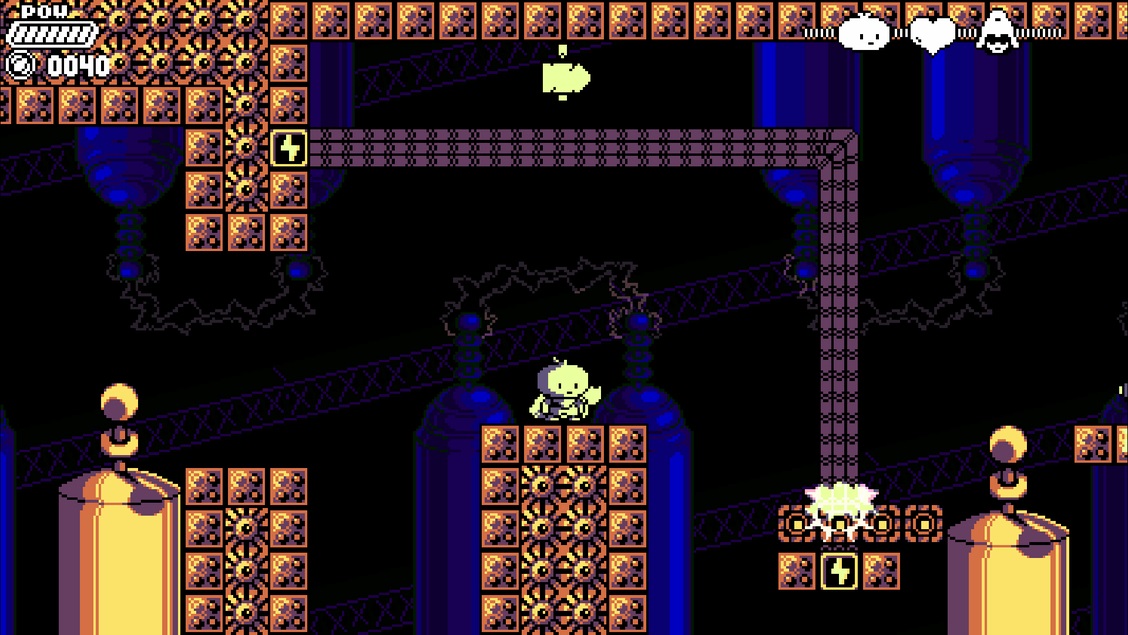
Atari’s raiding and revitalising of its back catalogue continues unabated with one of its most bizarre and ambitious reboots yet. Instead of just updating the graphics and mechanics of one of its arcade games, Yars Rising takes the world of the famous Yars Revenge and attempts to expand it out into, of all things, a Metroidvania.

The original Yars does make appearances from time to time in the form of hacking mini games that need to be completed in order to open doors and disable obstacles. These play around with the conventions of the original game but basically amount to charging a meter then blasting a target with a super shot. Sometimes there are barriers, sometimes there are mines to avoid or other enemies to defeat but it all amounts to a single screen take on the original arcade style experience.

These hacking games become more and more complex as the game progresses. But if you feel you have really had enough of them it will let you skip if you fail a certain number of times. On the flip side you can also access them from the main menu if you just want to play them over and over.

The main bulk of the game has players take control of Emi Kimura who has been hired to break into the QoTech corporation. This plays out in the classic Metroidvania style with players exploring the 2D environment and picking up new skills along the way to let them through previously unpassable barriers. There are boss fights as well which normally need to be finished off with a hacking mini game or they will spring back to life.

In terms of design, the environments are a fairly generic, sterile, future sci-fi setting. It does help to keep things clear and easy to see but there’s not a huge variety between the looks of each location which can make traveling around a touch dull at times. Enemy design is very much in the realms of robots and technology which shares the same clear but not inspiration feel (with the occasional Atari reference). In a nice touch, all the characters are voiced, and Emi will chime in with her own commentary on how thing are going from time to time (this can be turned off if it gets too annoying).

Much better, is the general feel of the game. Emi controls well and it’s easy to get her to execute whichever move you are trying. This means you can get a good flow while traveling around the environments, allowing for speedy trips across the map. There’s also a well-balanced mix of action and stealth with a few areas requiring you to hide in doorways or vents to avoid invulnerable enemies. It’s not exactly Metroid: Dread but it helps to break things up and all the mechanics work well. The music is also excellent with a host of jaunty, anime inspired tunes present.

Overall, Yars Rising is a fun and inventive take on an IP that may have otherwise struggled to survive the expectations of modern audiences. The classic Wayforward vibe is in full effect and while this may not be anything revolutionary, it is certainly fun and breezy and there’s nothing bad here. If you feel you need another retro tinged Metroidvania then this makes a good choice, even among the mass of competition of the Switch.

Overall 7/10

Monday, 26 August 2024

Tomba! Special Edition Review (Switch)

There’s certainly been a run of classic games making their way on the Switch recently. The games tend to be eight or sixteen-bit games though, so to see a previous Playstation exclusive pop up is a surprise for a number of reasons. It’s certainly not an unpleasant one though as Tombi!, is fairly pricey to get hold of on the original hardware and a decent game to boot.

The first slightly confusing thing is that though the game is listed as Tombi! on the Switch home page, it actually displays the Tomba! name when you boot it up (which was the US name). It’s a little thing but slightly odd none the less. In terms of this being a ‘special edition’, this is basically the original game with the now standard, save states, rewind features and screen options we’ve come to expect from this kind of release. There’s a few other options such as galleries and a music player as well but for the most part this is the original Playstation game in the original aspect ratio for better or worse.

Tomba!, is very much an example of the side scrolling 32-bit platformer. It feels a bit clunky but it’s solid enough and has a fairly unique approach to the genre. Your character can jump on enemies and then use them as objects to hurl at other creatures. Most of these are the evil pigs that are trying to take other the area but there are a host of other animals to chuck around as well.  There are also instances where you character can run into and out of the screen to reach another area and carry on the level in the background. Along with the platforming there's some light adventure elements where you need to find objects or keys to progress or solve simple puzzles but most of the time it's about jumping on pigs.

In terms of how it looks it still holds a certain charm. There’s a sort of quirky ugliness to a lot of textures and graphics of the 32-bit era that you can’t help but warm to. If you are into your retro games then it won’t bother you, just don’t get expecting Mario Wonder. It’s also perfectly playable once you get used to it and you can begin to see why it holds such a cult following among Playstation fans.

Overall, it’s yet another instance of us being glad that a forgotten slice of gaming history has been brought back to a wider audience. There have been some reports of crashes, but we didn’t experience any during our play through. Tomba! Is a great example of a Playstation platformer that still works today (with a bit of patience). It’s also a cheap and accessible way of playing a much sought after title and long may it continue.

Overall 7/10

Monday, 19 August 2024

Aero the Acrobat Review (Switch)

There are so many Super Nintendo games out there that it’s inevitable that not everything would appear on the Online service. It’s proving to be a goldmine for retro developers, and we’ve previously looked at the Top Racer Collection from QUByte and recently enjoyed working our way through the Jurassic Park compilation brought about by Limited Run Games. Fresh from an Evercade release, Sunsofts Aero the Acrobat is the next to make its way to Switch (and will soon be followed by its sequel).

Fairly well received upon original release, Aero the Acrobat fell into the second tier of Super Nintendo platformers behind the Super Marios and Donkey Kongs. It also shifted decent enough numbers for a sequel and spinoff game. We can also age ourselves quite badly by telling you there’s an original copy of the game sitting on the shelf. Honestly though, this is the first time we’ve really put a significant amount of time into it and it’s certainly good fun.

The thing that will take players the most time to adjust to is how Aero controls. We are so used to either Sonic or Mario style implementations that anything else just feels slightly off. Aero is probably closer to the more slip, slidey Sonic approach but after a few levels it all came together. The

It’s important to note that Aero can’t defeat enemies by jumping on them as well. He needs to do a jump and spin attack or use one of the many pickups such as stars which can be thrown. Even then there are a fair few enemies that are immune to your attack and simply need avoiding. There’s lots of objects around the colourful levels to interact with such as unicycles and trampolines as well which fit with the overall circus theme.

Levels themselves are loosely mission based with criteria needing to be met before you can exit. These normally require the player to search out platforms to disperse or a certain number of hoops to jump through. Most of the time this is fine but if you miss one there’s a strict time limit so it can mean a restart if you are not careful. In all honesty, the levels would be fine without these restrictions.

In terms of additions for this re-release there isn’t much in terms of the core game. You get the rewind and save state upgrades most retro revivals now seem to have and a few screen and filter options. However, you also get a host of gallery extras including the original instruction manual and a host of design and production stills. It’s a decent collection of museum items and something that could have easily been overlooked. It shows that little bit of extra effort that has been out in and it’s much appreciated.

Overall, we are glad to see one of the better and often overlooked games from the sixteen-bit era make its way to a new audience. Aero is well worth playing and is more than a simple clone of a bigger franchise. It’s not as slick as the big boys but it remains inventive and fun throughout. Now, if someone could just get hold of Skyblazer and Shadowrun that would be great.

Overall 7/10

Monday, 22 July 2024

SCHiM Review (Switch)

It’s not often you get an original take these days. Most indie games have settled into the Rogue lite, Metroidvania, Soulslike mould or gone down the retro nostalgia route (or both), but SCHiM is actually trying to do something a bit different. It’s an arty, isometric platformer where you play a little shadow creature, separated from your human who needs to jump from shady spot to shady spot to find your way home.

The style of the game is the first thing that really draws you to it. It’s set out in a sort of clear, minimalist way with the environments mainly panted with a single colour and strong lines used for shapes and objects. This not only gives it a sort of ‘arty’ feel but also allows the shadows cast by the objects, people and creatures to be clearly seen as there is no clutter. It’s through these shadows that your little SCHiM creature must move in order to reach the goal at the end of each level. This is normally a bus or over vehicle which then takes it off to the next scene.

Levels start small and focused but soon get much bigger. This allows for some exploration to find hidden objects but can also be a bit frustrating as it can be unclear where you are meant to go at times. You can hold a trigger which will zoom over to show your next goal, but we found ourselves needing to this a little to often. Finding hidden objects helps other SCHiM creatures find their way home as well which is a nice touch.

The concept is simple. You need to jump from shadow to shadow and landing in direct light will see you die after a few seconds and revert to the nearest checkpoint. If there are connecting lines cast (such as lamp posts), you can zoom along these and as you progress, you’ll find things like telegraph lines cause you to bounce and objects such as signs and trampolines can be used to fling you around. You can also interact with objects to do things like turn lights on, change traffic lights and fly drones. It adds a distinct puzzle element which for the most part works well, although some checkpoints are a little too far away.

The jumping works for the most part but it can be difficult to judge where you are going to land. This can be frustrating as you don’t get much flexibility if you land outside of a shadow and when you are trying to jump from thin lines to other small areas it can prove clumsy. The isometric viewpoint doesn’t really help with this, and it can also be difficult to see where you are at times. You can rotate the play field around through some set angles, but we still found a few places where there just wasn’t an optimal line of sight. Generally though, everything works out fine.

Overall, SCHiM is a charming game that has a lot to offer to those looking for something a bit different. It’s certainly not as relaxing as it looks at first glance but there is a consistent logic to the game and a well thought out obstacle course of things for you get around on each level. It’s one of those games that is bound to be referred to as ‘charming’ in the weeks to come, and it is. But there's also a whole lot more here as well.

Overall 8/10

Monday, 27 May 2024

Planet of Lana Review (Switch)

 Written by Thomas G.J. Sharpe

Thankfully, this is not a terrifying vision of an entire global sphere populated by Lana Del Ray clones that sing interminably, this is another cinematic platformer, and a darn good one at that! Much of the early coverage of Planet of Lana focussed on the visuals, drawing slightly basic comparisons to Studio Ghibli. While this comparison is correct in level of finish, the three-and-a-bit hours I spent with the game belie an interesting style of its own, no less beautiful, and a brilliant blend of puzzle, platform, and story.

This short, but well-formed, adventure starts in the titular Lana’s village. A coastal accretion of shacks and huts, with a population living out quiet lives. You learn the controls following your sister around and discover a sad family history. Then, in timely fashion, robo-aliens start piling through the atmosphere and do a kidnap job on everyone, which the nimble Lana is able to evade. These charmingly designed robots leave Lana alone, save for a small black cat-like creature called Mui. This is Limbo and Abe’s Oddysee for fans of Journey in a Wind-Waker colour palette. I dunno, the comparisons are still slightly non-functional. I was reminded of Brothers, obliquely, with the twin dynamics of tragic-adventure and co-operative puzzles. Lana and Mui work together to traverse the landscape, tame wildlife, and trash robot invader plans.

Some shots are just for show. The camera pulls out as you chase Mui down, wider and wider, until there’s a boulder crammed in a leafy canyon. There’s a tree sticking out of the top. It’s just for effect, played slow and careful. Lana trudges across a desert, despondent and defeated, everything lost (but a set up for an exhilarating reversal before the climax). Wishfully Studios have crafted something that has less vicious edge than its most obvious ancestors, Limbo and Inside. There was a longing, or hope against hope, that came to me from the sublime Spiritfarer. Lana is just capable enough, but there is a lonely and dangerous quality to the game. In this is my only real gripe, that many of the puzzles were a frustratingly tightly timed series of actions. If you failed to pull it off, there was a little long to get back into it, and often some setting up or pre-positioning that became real old, real fast if you’re stuck. This is certainly a personal problem, as I have such low patience, and such I am not docking too many points off Planet of Lana. Most puzzle or platform players will find this fine to accommodate.

Of particular note is the music. The score is so deftly handled that there is a real built sense from the small, yet bustling village, the peace of a forest gravesite, and quiet childhood games, to the soaring chase scenes, tense stealth sections, and eventual sci-fi battle grandeur. The compositions are linked with recurring motifs and themes, perfectly placed. There’s horns and bleeps and pads and all sorts. Just a real joy to experience.

Planet of Lana lasts around three to four hours (I was closer to four, but after looking playtime up, most did it around three, so I just suck) and is a taut experience that blends the best of this genre together. Between its presentation and its gameplay, there is huge value in a small package. Its core strength is this brevity, as the formula would not, in this reviewer’s opinion, have lasted to five hours. The push-me-pull-you, stelf-jump-stelf pattern is deployed for the right amount of time to engage us in a well-crafted adventure story, and no more. Knowing when to stop is a real virtue in games. Wishfully have made something special, intimate, yet grand, that seems to fit in your pocket.

Overall 8/10

Monday, 5 February 2024

Goodboy Galaxy Review (GBA)


So called homebrew titles have come on leaps and bounds in the last few years. Now, we have reached a place where developers can create titles for older consoles and have them fit perfectly into the indie marketplace. Indeed, we think it’s only a matter of time before one of the big developers decides to dive into the world of retro consoles with a fully-fledged retro release.

We’ve covered an ever-growing number of these games including, Micro Mages, Alwa’s Awakening and Witch N’ Wiz, as well as some of the compilation which have made their way to Evercade, who could forget the excellent Tanzer after all? The latest of these to reach our door is Goodboy Galaxy, a platform exploration game for the GBA.

The plot is simple and follows a space dog called maxwell as he fly’s around various planets solving quests and making friends. It’s all one large collectathon, but that doesn’t mean it isn’t fun. Each character you meet along the way will require help in some way (normally finding things) and will then give you their friend card upon completion. Some also give you other items as well to further aid your exploration and allow you to get deeper into galaxy.

Goodboy Galaxy is not a Metroidvania game though, thanks to the well-placed gates around each planet. Maxwell can jump, has a shield which will absorb damage and has a blaster. However, when you pass through one of the gates on each level something will be disabled. This could mean losing your jump, meaning you must think creatively about switches or platforms, or losing you weapon or shield meaning you are much less protected. It’s a gimmick that lasts throughout the game and allows a series of short but interesting puzzle platform sections to be thrust on the player. There are of course ways of getting around these to reveal secrets as well.

It's good then that Maxwell handles excellently. You must get used to the game as it has its own mechanics such as the firing pace of the weapon and the jump working slightly different than how you would expect, but once you’ve played it for a while it all becomes second nature. It’s cleverly done and shows real thought has been put into how players are expected to traverse around the worlds.

The look of the game is classic Gameboy Advance platformer. Bold colours and large cartoon like sprites are the order of the day and you can’t help but smile at the heavy nostalgia and generally joyful vibe. It fits the style of game perfectly, as does the character design which effectively takes animals and objects and puts bigger eyes and jackets on them. Each planet also sticks with the bright feel, while also being distinctive from each other to keep the overall look from becoming too samey.

Overall, Goodboy Galaxy is a fun game that would have easily found an audience if released during the original GBA years of handheld dominance. It’s like finding a hidden gem for the system and hopefully it will find a much larger place when it releases on modern consoles (Goodboy Galaxy is also currently available on the Evercade). There’s a lot of fresh ideas here and if you are looking for something new that seems like something old then this is an excellent place to start.

Overall 8/10

Monday, 14 August 2023

Garlic Review (Switch)

We’ve said this before, but the Switch is absolutely stocked full of hardcore platformers for people looking to speed run their way through hell. As such, it takes a lot to stand out. We hadn’t heard much about Garlic but after a few minutes we knew this was something special.

Garlic certainly is another of the hardcore platformer brigade, but it has a very different feel than pretty much all the others out there. Much of this comes from the games offbeat humour and it’s unique look. Away from the standard pixel art approach most of these games take, Garlic looks like something that should be running on the BBC Micro and as such has a completely different feel than pretty much everything else in the genre. The simple colour palette and clear visual style is excellent and works perfectly.

Happily, it may look like a BBC Micro game but it runs a hell of a lot smoother than most of the platformers on the system. Your garlic headed guy zips around flawlessly and at a tremendous pace, which is handy as the levels are tough to say the least. You only have a few moves at your disposal, but they allow you to overcome the many obstacles you’ll face. Your main skill set is tied into your super meter. This continually recharges and when full allows you to zoom forward or upwards and can be utilised while jumping or falling. This acts as your main device to get you around the many dangers you face and is also your way of damaging enemies. You can also cling to walls for a limited period.

Though Garlic may be tough it rarely asks you to do anything twice due to an excellent checkpoint system. These come in two forms depending on the level you are in. Some levels are longer scrolling sections and these often have the standard checkpoint flag situated somewhere within them. About ninety percent of the time this will be exactly where you want it to be after short but tough sections. On other levels Garlic takes another inspiration from its retro past and saves when you leave a screen. A lot of the levels take the single screen approach and don’t scroll. This helps frame single screen puzzles for players to overcome before moving onto the next with the confidence that you won’t need to repeat anything if you die. There’s some clever level design which utilises this single screen approach as well which shows real creative thought.

Aside from the main 2D platforming, Garlic also throws a number of mini games at you which brings out a lot of the games weird humour. For instance, the first mini game has you walking into the screen trying to avoid treading on dog poo while a later one has you queuing up waiting to play on an arcade machine while you get increasingly frustrated.

Overall, Garlic is a wonderful surprise. It’s one of the most creative, smooth and accomplished platformers of this type we have ever played. It seems destined to be overlooked as there's very little hype around it but this is crazy as it’s a genuine classic. We absolutely loved playing through Garlic from start to finish. Yes, it is tough but the fact the checkpoints work so well means you are always making small progress and it keeps unnecessary frustration as bay. It’s unique look perfectly hits the nostalgic vein and does so in a different way to pretty much everything else. We can’t recommend this enough, it’s a retro inspired indie classic.

Overall 10/10

Monday, 31 July 2023

Mr Run and Jump Review (Switch)

Atari has been going full throttle recently with both its back catalogue and trying to bring new IP to the market as well as merchandise and original cartridges for legacy systems. We’ve covered multiple releases so far with many more falling by the wayside as the sheer amount of them are seemingly near impossible to cover. Mr Run and Jump is an attempt to create something new in the retro style and possibly set up a new mascot for the company as well. It’s a good thing then that it’s actually pretty good fun.

Mr Run and Jump follows in the footsteps of the host of indie hardcore platformers out there. A sort of neon Super Meat Boy if you will. And it is pretty hardcore. The levels get difficult quickly and though the game is short, the individual levels are lengthier than you would expect from this sort of game. You don’t have to beat them in one go though. Each stage is built out of a number of different screens and when you move from one to the next it acts like a checkpoint. Of course, one touch and you will die but at least you are not sent back too far each time. For those that die often and want to progress there is the option to turn Mr Run and Jump rainbow which makes him much more durable.

The thing that sets it apart from many of them is its visual style. It has a clear vector design with objects and characters outlined with different neon colours. This perfectly captures the retro feel that the game is going for. The simple but striking design also makes it clearer for players to identify traps and obstacles meaning it’s easier to concentrate on racing through the levels. In terms of the look of the game it’s a resounding success.

Each level is filled to the brim with spikes, traps and enemies and you’ll need to be using your entire move set pretty early on in order to even have a chance of getting to the next area. Mr Run and Jump can double jump and wall slide, roll and sort of rocket along with the moves chainable in quick succession. A simple jump will quickly not do, so before you know it you’ll have to jump, slide down the wall before rocketing between a set of spikes or enemies. It’s helpful then that Mr Run and Jump is responsive and easy to control, which of course means everyone of the many deaths you will suffer are entirely down to you. There’s a host of collectables in each stage for the platforming sadists out there with both shards and orbs (retrieved from even more devious trap filled rooms) filling each stage and needed to access the later levels of the games.

Overall, this is a good step from Atari and trying to establish some new franchises, while also tapping into the nostalgia held by both the brand and in the minds of the many gamers that still recognise Atari with fondness from their youth. It must also be said that Atari hasn’t really put a step wrong so far in this mass marketing of their held IP. The many arcade revivals, collections, and it’s Warioware alike have all been fun, well presented, and worth playing. Mr Run and Jump is no different and is another easy recommendation from us.

Overall 8/10

Monday, 10 July 2023

Planet of Lana Review (Steam)


Written by Thomas G.J. Sharpe

 Thankfully, this is not a terrifying vision of an entire global sphere populated by Lana Del Ray clones that sing interminably, this is another cinematic platformer, and a darn good one at that! Much of the early coverage of Planet of Lana focussed on the visuals, drawing slightly basic comparisons to Studio Ghibli. While this comparison is correct in level of finish, the three-and-a-bit hours I spent with the game belie an interesting style of its own, no less beautiful, and a brilliant blend of puzzle, platform, and story.

This short, but well-formed, adventure starts in the titular Lana’s village. A coastal accretion of shacks and huts, with a population living out quiet lives. You learn the controls following your sister around and discover a sad family history. Then, in timely fashion, robo-aliens start piling through the atmosphere and do a kidnap job on everyone, which the nimble Lana is able to evade. These charmingly designed robots leave Lana alone, save for a small black cat-like creature called Mui. This is Limbo and Abe’s Oddysee for fans of Journey in a Wind-Waker colour palette. I dunno, the comparisons are still slightly non-functional. I was reminded of Brothers, obliquely, with the twin dynamics of tragic-adventure and co-operative puzzles. Lana and Mui work together to traverse the landscape, tame wildlife, and trash robot invader plans.

Some shots are just for show. The camera pulls out as you chase Mui down, wider and wider, until there’s a boulder crammed in a leafy canyon. There’s a tree sticking out of the top. It’s just for effect, played slow and careful. Lana trudges across a desert, despondent and defeated, everything lost (but a set up for an exhilarating reversal before the climax). Wishfully Studios have crafted something that has less vicious edge than its most obvious ancestors, Limbo and Inside. There was a longing, or hope against hope, that came to me from the sublime Spiritfarer. Lana is just capable enough, but there is a lonely and dangerous quality to the game. In this is my only real gripe, that many of the puzzles were a frustratingly tightly timed series of actions. If you failed to pull it off, there was a little long to get back into it, and often some setting up or pre-positioning that became real old, real fast if you’re stuck. This is certainly a personal problem, as I have such low patience, and such I am not docking too many points off Planet of Lana. Most puzzle or platform players will find this fine to accommodate.

Of particular note is the music. The score is so deftly handled that there is a real built sense from the small, yet bustling village, the peace of a forest gravesite, and quiet childhood games, to the soaring chase scenes, tense stealth sections, and eventual sci-fi battle grandeur. The compositions are linked with recurring motifs and themes, perfectly placed. There’s horns and bleeps and pads and all sorts. Just a real joy to experience.

Planet of Lana lasts around three to four hours (I was closer to four, but after looking playtime up, most did it around three, so I just suck) and is a taut experience that blends the best of this genre together. Between its presentation and its gameplay, there is huge value in a small package. Its core strength is this brevity, as the formula would not, in this reviewer’s opinion, have lasted to five hours. The push-me-pull-you, stelf-jump-stelf pattern is deployed for the right amount of time to engage us in a well-crafted adventure story, and no more. Knowing when to stop is a real virtue in games. Wishfully have made something special, intimate, yet grand, that seems to fit in your pocket.

Overall 8/10

Monday, 29 May 2023

Velocity Noodle Review (Switch)


Written by Dan Gill

“Git gud”. This phrase has been mentioned by me in the past, as you find that in reviewing retro games (or at least new games styled on retro games), you need to tap into the skills you had when you were younger. You need to call on the resilience you had in your youth, a time where you likely had few games, and the ones you did were often as hard as nails. Some modern retro titles go as far as touting the difficulty of their game as a selling point, a way to appeal to the hardcore gamer, a way to weed out the posers and gamers raised on the handholding of modern titles. In the case of Velocity Noodle the blurb for the game even uses “git gud” in its sales pitch. Basically, if you’re coming into this game expecting anything other than a challenge, you’re in for a bad time.

Set in a neon-drenched cyberpunk city, your job is to deliver noodles as fast as you can. Well, that’s the McGuffin at least, really the aim is to get from the beginning of the level to the goal as quickly as you can. Awards are earned for beating set times, or by grabbing awkward to reach chopsticks hidden in each level. The usual platformer moves can be used (dash, double jumps), along with the use of your character’s sword to trip switches, grip walls and activate teleporters. Each ability is introduced to the game with a selection of levels to try them out and provides a decent amount of time for the player to pick things up before moving on. As the game progresses, you find yourself having to string moves together to navigate the Velocity Noodle’s tricky levels.

Velocity Noodle is tough, there’s no disputing that. Thankfully it feels like progress is achievable through perseverance, unlike other titles (I Wanna Be the Guy, for example) which veer towards the fury inspiring end of the spectrum. VN has led to a few grunts of frustration and bad language during my time with it, but I’ve generally been able to come back and make progress without flinging the Switch across the room in frustration. The most irritating moments tended to be when the game didn’t play fair. The controls don’t feel quite as tight as they should be, as often I’d try to dash slide through a narrow space only to be stopped by a wall due to the crouch not being picked up. I tried with a few different controllers using both digital and analogue, but it’s still a little hit-and-miss. Setting Y as the restart level button is also a strange move. The number of times I pressed it instead of dash (X) resulted in many cross words and lots of starting over.

The game’s most unfair sections come during chase levels. You spend the level being hounded by a drone which seems to behave quite randomly, and not being able to predict or easily dodge its movements often result in restarting the level over. It’s one thing to be stymied by your own lack of skill (something I’ll admit to), but the game cheating the player feels a little unfair. Add to this some slight slowdown/judder during some levels (at least in handheld mode), one can’t help but feel a little hard done by.

When it does work, Velocity Noodle is a lot of fun. It looks and sounds nice enough (although some items in the foreground aren’t always distinguishable from the background), and the in-game dialogue is mildly amusing. The satisfaction of stringing a combo together to traverse a tricky section feels good, and the game does make you want to return to make progress rather than put you off like some other games in the genre. Challenges and bonus levels await the hardcore, so there’s something for those that enjoy the pain. For the rest of us, there’s enough to enjoy without needing to put in hours of practice, just bring a little patience and you should do fine.

 Overall 7/10

Monday, 8 May 2023

Lunark Review (Switch)


Written by Thomas G.J. Sharpe

As cinematic platformers are on the re-ascendant it is heartening to me to see a developer making the case for the vital fibres of the genre. Flashback, Prince of Persia, and Abe’s Oddysee are all sort of the organs of Lunark, and it works out like a great slice of uncompromising pie.

The scene of this CINEMATIC platformer is sadly the weakest part of Lunark. The story is Deus Ex: Human Revolution adapted for a 90’s Saturday morning children’s cartoon. You play Leo, who is a peppy courier with a slight otherness to him, marking him against the human characters (like Jensen’s nano-guts), who has his very own guiding tech-mentor Gideon (like the fella with the office and the goatee). Things go chaotic at Gideon’s robot factory, however, and Leo is going to have to find out who’s behind it all. There are many locations to visit from futuristic city skylines to dank caverns, with a fun conspiracy narrative that won’t stretch your brain too much.

Rather than a beige-yellow-black cyberpunk murk, however, there are colours and adventure and boldness to Lunarks design. Having said that, there is a bit of a spattering of design styles on show here, which is jarring. There is beautiful, serious rotoscope cinematics (a la Flashback), with bold and blocky character portraits that take many styles. The occasional 3D model, lovingly frosted into abrasively large pixel form, work well, while some characters seem too small to make sense of. It is an odd presentation that I never quite got on with, but I do like the boldness of this game’s look.

To keep track; bold presentation, meek writing. So, the gameplay has to make up the mark and then some. And it does, for me. Lacking the fluidity of Conrad’s movements in Flashback, Leo is more noticeably taking a slot at a time on the ground. There is a plodding, but via this, thoughtful pace. Each little section can be tackled like a sequence of movements and actions that, if you get wrong, you soon learn costs you quite dearly. I bucked my ideas up and paid attention to jumps, ledges, enemy patterns, and obstacles, after Leo kept meeting his demise. At times this can feel quite punishing due to the distance of respawn points varying from quite close to too-far-to-be-enjoyable. You’ll get into the groove, or you’ll bounce off, probably, as the story isn’t quite compelling enough to drive it alone. Combat is inevitably pulled into this steadier flow too, where you have to fall into view of a drone or wee monster at the right time to get to cover, or get your shots off. There is a lot of timing and a lot of learning which movement keys to get in the right time, and during which cycle of movement. The difficulty curve isn’t that steep, but make sure you take your time.

I ended up enjoying the considered pace. There are very mild collectible-side-quest-NPC gewgaws to indulge in. The fact there was such a small amount of these felt like a song from a simpler time (I am currently playing through all the Assassin’s Creed games, so I’m generating a deep hatred for any collectible clutter like some gaming Marie Kondo). In fact, all of Lunark speaks from a different place. There is a lack of cynicism, a straight-forwardness, and a clarity of purpose that works. This is a tight and specific game, that speaks to an older time.

Much like point and click adventure games spawned new game types, the cinematic platformer was eaten by its own offspring (see Fade to Black) that pushed for greater excitement, embraced new visual angles, and sped up and up. These two genres are seeing a resurgence at the moment, and Lunark holds a particular spot with an entertaining game, that serves both something old and something new confidently and with a keen sense of joy.


Overall 8/10

Monday, 13 February 2023

Wonderboy Anniversary Collection Review (Switch)


Written by Dan Gill

When I received the Wonder Boy Anniversary Collection, I was initially a little confused. Hadn’t this come out a few months ago? Imagine my embarrassment when I realised, I was thinking of the Wonder Boy Collection which was released in the sweltering summer of 2022. I should have known really, as the selection on games on offer here is quite different from that collection. Well, OK, not so different. It seems that the difference between the Anniversary Collection and the plain old vanilla Collection is that the former contains a comprehensive selection of Wonder Boy titles, spread across several different versions each of 6 games from the Wonder Boy/Monster World series.

If you’ve purchased any kind of retro collection in the past few years, you’ll know the drill, classic games with modern conveniences. The WBAC has the usual bells and whistles we’ve come to expect including save states, concept art, promotional material from the time and various settings to emulate a CRT. The number of games on offer is generous, as the 6 different games have platform and region variations, bringing the game count to 21. Emulated systems range from the original arcade version through the Master System, Game Gear and Mega Drive/Genesis. It’s a package to cater for every Wonder Boy fan, as you’re likely to pick your favourite version. You want the Game Gear version of the original game? You’ve got it. You want to play Monster World IV as it was on the Japanese Mega Drive? Fill your boots. This is as comprehensive a package for Wonder Boy as you can get, at least without chucking all the Adventure Island games in there too.

The games themselves are great. The original Wonder Boy is showing its age now, but it’s the foundation on which the series is built and proves to be an interesting curio for those that want to see what platform games were like in the wake of Super Mario Brothers. Wonder Boy in Monster Land shook things up by introducing some RPG-lite elements, while Wonder Boy III: Monster Lair combines platforming with shoot-em-up sections. Probably the most revered title is Wonder Boy III: The Dragon’s Trap, due to its Metroidvania style of gameplay. Monster World III and IV continue in a similar vein, playing out like an ARPG. Each game is still worth playing since their influence can be seen in so many other games.

However, here’s the problem. If you forked out for the previous collection, you’d be forgiven for feeling a little seen off. This is the definitive collection for these titles, and the old collection’s paltry collection of four games feels decidedly stingy in comparison. The release of the newer package so soon after the old one feels like a poke in the eye for early adopters, as they’re now left with just a few tasty scraps rather than a sumptuous banquet.

Is it worth your money? Based on what’s on offer here, yes. The games themselves are great, and the variety of ports is excellent. However, if you’ve already shelled out for the previous collection, you’d likely feel stung by having to hand over money twice over to complete the set of games. The price of the collection (£45 in the eShop) isn’t exactly small change, so you’d either need to be an avid fan or wait for a sale before picking this up and leaving yourself with a redundant collection that’s not even a year old. For everyone else, the package comes highly recommended. A bit more spit and polish in the presentation department would have been appreciated, but the amount of gameplay on offer here is generous and is pretty much essential for any Wonder Boy fan.

8/10


Monday, 5 December 2022

Lunistice Review (Switch)

Every generation has that special moment in their life, a little slice of time that they fondly recall. For most, it probably coincides with their teenage years. For me, it was the mid-to-late nineties; Britpop, cult TV, leaving school for college and the arrival of 3D games. As is perhaps normal for people around my age, I still think the nineties was only about ten years ago, so it’s nice to play Lunistice, since it feels like a forgotten PS1 title.

Playing as Hana the Tanuki, the aim is to reach the end of each level while collecting origami cranes and avoiding (or taking out) enemies. The game is so focussed on gameplay that there’s very little in the way of cutscenes (a brief one at the beginning and another at the end). This pared-back design initially made me feel as if something was missing, but as I progressed through the levels I began to fall under its spell. This is a pure 3D platformer from the Crash Bandicoot/Sonic Adventure camp; full 3D movement but exploration is limited to the odd branching path here and there.

Adding to the nostalgia is the design; low poly models and textures nail the PS1/Saturn aesthetic. Were it not for the silky-smooth movement and long draw distances you could swear you were playing a port from the days of Nights into Dreams or Pandemonium, and an optional CRT filter adds to the nostalgia. The pace at which the game moves when grinding a rail evokes memories of Sonic’s glory days. This is all accompanied with suitably jaunty music throughout.

Platforming is the main pull of the game, with a series of small ledges, huge drops, rails to grind and a sense of inertia to contend with, the enemies are really a secondary through, another hindrance to trip you up. While Hana’s fast and floaty to control at first, trial and error helps the player get some idea of how to fine tune her jumps and nail the landing. The addition of an almost obligatory double jump (and even a triple jump with the use of a spin attack) helps negotiate the game’s trickier later levels.

The levels are well thought out, and feel fine tuned. The player is rarely able to cheat the game as distances have been planned with a very specific jump combo in mind (my fifty plus attempts on certain sections towards the end verifies this), but should Hana plummet into the abyss she’s whisked back to the last checkpoint, which is normally near enough to feel fair, but far enough apart to add a sense of dread at having to traverse a particularly painful section for the umpteenth time. There are enemies, too, although not wave upon wave. They tend to occupy platforms to need to lad on, or block your jump from one ledge to another. There aren’t any boss battles, so you just have a few basic types of foes to deal with. A little more variety in enemy design would have been nice, but being their presence is mainly to add a little life to levels it’s hardly a damning criticism of the game.

Lunistice is a pleasant surprise. I must admit I knew nothing of it until I started it up, and I’m glad I didn’t, as I had no expectations going into it. It’s a game I didn’t realise I wanted to play, and thanks to its tight design and limited number of levels, it probably took me a couple of hours to play through from beginning to end. I feel there’s some items I missed, so it’s likely I’ll replay it to see what else it has to offer, but it ultimately it gave me those same nostalgia vibes I get when I fire up the PlayStation Classic. Even though I’m in my forties, my waistline is larger and my hairline has vanished, I’m briefly transported back ten years (give or take) to the late nineties.

9/10


Friday, 13 May 2022

Never Alone Fox Tales DLC (Switch)

Never Alone is a beautiful game that told the story of a young girl and an Artic Fox as they explored the snow covered tundra around them. It also drew heavily on folk law and helped present a new set of stories from a different culture to the world. The recent Switch release brought this to a new audience so we are here to give you another gentle reminder to check out the game with this look at the included Fox Tales DLC.

Fox Tales is a three level addition to the main game and tells another story. This time the tale is one of the pair trying to rescue a small mouse that has been washed away by the spring currents. On their journey they encounter a huge monster mouse that is frightening people away from a lake and decide to defeat it so people will no longer be scared.

The game plays like the original but is more puzzle based and our two adventurers spend most of their time in the water or canoeing on top of it. The main role of the fox is now to move spirits around to cause fast currents to flow in different directions. The girl is mainly used to pick up rocks and then drop them so they bounce around to their destination aided by the movement of the spirits. It’s sort of a cultural marble run. 

It all works well and the story being told is both interesting and enjoyable. It’s not particularly difficult and certainly won’t last you more than an hour or so but it’s great to see the game taking on more folklore tales and putting them across in such a beautiful way. The new mechanics such as rowing the canoe and the new puzzles fit well also. If you liked the original you should really give this a try as it adds some new idea to the core game while remaining beautiful and magical as ever. 

Monday, 14 March 2022

Never Alone Arctic Collection Review (Switch)

In Never Alone you play as a small Inupiaq girl named Nuna as she sets out from her village one day and finds herself lost in a terrible blizzard. She stumbles upon a small arctic fox and together the two set out to return home. Along the way they become swept along in various stories from the folklore of the Inupiaq people in what is a puzzle/platform game that has a heavy dose of storytelling and a magical atmosphere not like anything else we’ve played before. The relationship between the two builds throughout as they simply can’t survive the environment without one another. This version of the game also contains the Foxtales DLC which will look at in more depth a little later. 

The game is a 2D platformer much in the mould of something like Limbo. Imagine Limbo with a more natural looking design and the black replaced with white and you wouldn’t be far off. As the pair of Nuna and the fox you must work together to make your way across the harsh landscape of Alaska. Nuna can run and jump and eventually gets access to an ice smashing bolas. The fox can scramble up walls and also talk to the many natural spirits that inhabit the world.

Many of the puzzles involve getting the fox into areas where he can then draw spirits back to help Nuna. Spirits generally take the form of birds that can be used as platforms or creatures that can be used to climb walls. The fox can also control trees and fish. It’s a nice mechanic and one that normally works well. You switch between the two characters with the press of a button or a second player can be brought in to help out. Together you need to overcome everything from polar bears and strong winds to breaking ice and even the odd menacing and magical creature.

Occasionally the computer AI will let you down and your partner will do something stupid and die but on the whole it didn’t stop our progress and there isn’t anything here that should cause you too much frustration in that respect.  The fact checkpoints are fairly generous also helped to keep the frustration low.

It’s hard to talk about the game without giving away much of its magic and surprises but we will say that you are constantly faced with something new to play with or overcome. Each chapter is distinctly different from the last and almost all of them introduce a new mechanic or toy to play with. This means that the game always remains fresh and is all the better for it. It has a fairly brief run time at about three and a half hours but it’s an experience that is far richer than the run time would suggest.

The whole thing is underpinned with some beautiful graphics and a haunting score and these combined with the howling winds make a perfect setting for the story and fill the whole game with a unique and wonderful atmosphere. The narrator of the story also does an incredible job of drawing you in and making you feel real empathy for a little girl and fox lost in the snow. The narration is done in the indigenous language which is a very clever choice as we don’t feel narrating in English would have had anywhere near the same impact. You can just imagine everyone huddled around a fire in the snow listening to him tell the tale.

Overall, Never Alone is a wonderful piece of storytelling tied to a very good platform/puzzle game. It’s an original take on a well-trodden genre that draws inspiration from a rich culture that many of us will know very little about. As such, it creates something unique and new for audiences to enjoy. It creates a world filled with magic and wonder and isn’t that something we all want in our lives a little more?

Overall 8/10

Monday, 7 June 2021

Kaze and the Wild Masks Review (Nintendo Switch)


Kaze and the Wild Masks has been causing quite a stir among fans of retro styled games recently and it’s not even a Metroidvania. Heavily influenced by classic Rayman and Donkey Kong games it certainly wears its influences clearly on its sleeve but Kaze is more than just another imitator.

Indeed, when were first looking at it we wondered if instead we should just go back and play one of its main influences instead? As it turns out that would have been a mistake as Kaze has more than enough of its own personality to stand alone in the market.

As always with these things the plot is somewhat crazy. In this case you need to save your friend Hogo from a host of recently cursed and mutated evil vegetables. In order to do this you need to use magical masks that offers unique abilities as well as your standard running, jumping and floating skills. The masks in question are similar to Donkey Kong’s animal friends and allow Kaze to draw on the powers of a shark (for swimming), A Tiger (for climbing) an Eagle (for Flying) and a Lizard (for, erm, zipping around).

You can’t use the masks all the time and they are instead limited to specific levels designed around the particular skill set required. The abilities help to add variety and do lead to some fiendish and downright evil level design. Speaking of which, the games that most influence Kaze’s levels are clearly both the original Rayman and the Origins and Legends reboots. The rhythm of them is very similar and when you are placed into one of the ‘chase’ stages we couldn’t help thinking about the crushingly difficult auto-run stages featured heavily in Origins in particular.

This highlights another feature of Kaze, that being it’s tough even from the early going. This can be mitigated to some degree though the settings which allows players to pick a difficulty which adds extras checkpoints but be prepared to need a sizable chunk of patience in order to progress. You are also going to need to have a Jedi-like understanding of the controls as well. This isn’t one for the feint hearted.

It’s handy then that the controls work well. Away from the masks, Kaze has a number of standard abilities at the player’s disposal. The key ones are the spin (which acts much like Dixie Kong’s hair, Or a Tasmanian Devils spin for that matter), a downward dive and the good old head bounce. The head bounce is surprisingly the one that you’ll need to get the hang of due to the fact that you spin afterwards. This fine for when you need to continue forward momentum but you can’t jump out of the animation. This means if you miss time jumping on an enemy that you need to bounce off to reach a platform by a fraction you normally end up plummeting to your doom.

On the standard setting you only get one checkpoint per level as well so be prepared to repeat the same sections over and over again. This highlights one feature of Kaze and retro gaming that we really don’t want to be reminded of. Yes, the dreaded ‘memory test’ is very much present here.

There are numerous levels where players have no real chance of progressing without edging through each section following death after death. There simply isn’t enough time for players to react to things on the fly so remembering how enemies move and the sequence of obstacles becomes the only route to progression. The same fate befalls boss battles meaning you are effectively having to play each one at least three times to have any chance of success.

The level design in general though is excellent, so those that can cope with the throwback style will find little else to complain about. This goes for the game overall as well as the general presentation and feel is excellent. The fact it easily matches Rayman and Donkey Kong in terms of mechanics and style speaks volumes for the work that has been put into it.

Overall, Kaze and the Wild Masks is a perfect throwback to the days of the 16-bit platformer (or at least the homages to 16-bit platformers that came later). This is both a good and bad thing depending on how you look at it. We could have done with it being a little bit less faithful in a few aspects but there is so much here to love that anyone with that retro inkling should put it at the top of their platforming wish list.


Overall 8/10

Tuesday, 8 January 2019

N++ Ultimate Edition Review (Switch)


We’ve been playing the N series for a long time but the rather lovely limited physical release of the Ultimate Edition on Switch was too much to resist (yes, we actually bought a game to review with our own money!), and a chance to head back into such a pure piece of skill based gaming is something the Switch really needed. The fact the game has now almost doubled in size certainly helps as well.

N++ Ultimate Edition is the final version of the game in the N series and comes packed with a ridiculous amount of content. You get pretty much all the levels from N and N+, N++ and a whole host of new levels of well. In all there are around 4000 thousand levels to test yourself against. If that isn’t enough there are also race and co-op levels to try out. If that still isn’t enough there’s also a level editor to make and share levels online.

As well as levels there are a host of graphical options and music tracks to unlock as well. It’s hard to think how exactly any more could have been squeezed in here. It’s certainly good to have lots of different things to play around with as you’ll be dying a lot. Luckily, restarts are pretty much instantaneous now so you can set off to make exactly the same mistake again in a matter of seconds.

Presentation in N has always been minimalist and it remains the same here with a simple selection of colours for each scheme and clearly defined level design. It means everything is focused on getting your little ninja to zoom around the levels at break neck speed and we wouldn’t have it any other way. We really liked the retro graphic scheme (not a massive surprise perhaps?), which makes the game look Vectrex-esque with lots of neon outlines.

The goal of each level is to hit a switch that opens the exit door and then make your way to it. A timer bar continually ticks down throughout the set of levels you have picked and it can be topped up by picking up little gold squares. Hit the switch, grab the squares and avoid the mines and obstacles and then move on. That is essentially it, a simple concept but one that never gets old.

With the new levels come some new enemies to get your head around. The missile and gun turrets return along with all your most loathed contraptions from before but now you also have to deal with a host of new death machines such as the evil ninjas that follow your exact movement trail. Of course if they catch you it’s all over but then everything kills you in this game. Everything.

The gameplay itself is based around an inertia system. As your ninja runs, jumps and falls they pick up speed which can then be used to launch off surfaces or up the side of walls. Hit the ground from too high and you die, but hit the ground on a downward slope and your ninja will just keep running ready for the next set of acrobatics. It’s a simple system that works perfectly and you can only wonder how long it took to balance out in testing. Most importantly it makes you feel like a badass super ninja and when you get the flow of a level there a few better feelings. Luckily, the game allows you to watch replays of both your and everyone else’s best runs to show off and also see how to shave seconds off your time.

Overall, N++ is an outstanding game. It’s just so full of excellent content and imaginative ideas that platform fans have to check it out. It’ll also last you forever and even if you do get through everything then you can start designing your own levels. It’s the definitive version of one of the best indie games ever. Buy it, love it and get killed thousands of times in it.

Overall 9/10

Thursday, 31 May 2018

Fox N Forests Review (Nintendo Switch)


The indie landscape is filled with 2D platformers that are inspired by the 8 and 16 bit games of the past but very few them go to the lengths that Fox N Forest does to make you really feel like you are actually playing something from a bygone era. The game markets itself as being a 16-bit style action platformer and it certainly wouldn’t be out of place on a system like the Amiga.

The impressive pixel art style is the first thing to hit you when you first open up the game. A lot of faux retro games don’t really look the part but this certainly does with rich colours and character design that helps to create a beautifully unique game world while also firing off many a nostalgia rocket.

The plot is something lifted for gaming’s golden era with a breezy fable so slight it doesn’t even grace the pages in the various online shops the game is listed. It’s something about a magic fox having to restore seasons to a forest and break a spell. It matters little and serves as a good device for the games key season changing mechanic.

As the hero fox progresses through the levels you are able to change them to a predetermined second season. This affects the landscape considerably and is essential for progression and hunting out all the secrets that each area contains. For instance, you might need to change a season to winter in order to freeze a lake or autumn to make the tree branches free from foliage and thus climbable. It’s an integral part to the game and forms the core of your exploration - proving to be far more than a simple throw away gimmick.

Level design is mostly excellent with the varied stages designed to be visited multiple times in order for new routes to be sniffed out. This is a good thing, as in order to progress there is an arbitrary number of magic seeds you will need to find to unlock the next area. This was the one part of the game we felt a little let down by as though levels are generally a pleasure to experience over and over it did become frustrating when we couldn’t find the one seed we needed to open the next area.

The other slight issue is that the fox takes a bit of getting used to in terms of controls. A conscious decision has been made to not allow you to shoot arrows while jumping which is fine but our hero has a slightly strange weight to him which certainly took as a while to master. Some moves can also be a little tricky to pull off and in a game which can become stubbornly tough the last thing you need is to feel like the controls are against you as well. That said there are generous checkpoints throughout so progression is rarely halted for long.

At the end of each world you face off against a giant boss who requires thought and use of the season mechanic to vanquish. These are impressive showdowns with a memorably match up against an imposing wasp being particularly memorable.

Overall, Fox N Forests is an excellent take on the retro inspired action platformer. It has a unique world and it requires players to think about the game mechanics and how they and the character you control interact with the world. It also looks lovely and it’s clear that near endless thought and passion has been poured into it.  We would have liked some more levels and there are certainly a few things that could be refined but it still comes out head and shoulders above most other games of this type.

Overall 8/10

Wednesday, 5 August 2015

N++ Review (PS4)


Ever since N++ was announced we’ve been eagerly anticipating returning to the inertia based platforming. The memories of hand cramps and worn out fingers are still fresh in the mind from the Xbox 360 version of N+ and a chance to head back into such a pure piece of skill based gaming is something this generation of consoles really needed.

N++ is the final game (or version of the game depending how you look at it), in the N series and comes packed with a ridiculous amount of content. You get pretty much all the levels from N and N+ and a whole host of new levels of well. In all there are a couple of thousand levels to test yourself against. If that isn’t enough there are also race and co-op levels to try out (though you can't do this online anymore). If that still isn’t enough there’s also a level editor to make and share levels online and there will be incoming DLC as well. 

As well as levels there are a host of graphical options and music tracks to unlock as well. It’s hard to think how exactly any more could have been squeezed in here. The levels can be tackled with up to three friends as well in local co-op. It’s certainly good to have lots of different things to play around with as you’ll certainly be dying a lot. Luckily, restarts are pretty much instantaneous now so you can set off to make exactly the same mistake again in a matter of seconds.

Presentation in N has always been minimalist and it remains the same here with a simple selection of colours for each scheme and clearly defined level design. It means everything is focused on getting your little ninja to zoom around the levels at break neck speed and we wouldn’t have it any other way. We really liked the retro graphic scheme (not a massive surprise perhaps?), which makes the game look Vectrex-esque with lots of neon outlines. 

The goal of each level is to hit a switch that opens the exit door and then make your way to it. A timer bar continually ticks down throughout the set of levels you have picked and it can be topped up by picking up little gold squares. Hit the switch, grab the squares and avoid the mines and obstacles and then move on. That is essentially it, a simple concept but one that never gets old.

With the new levels come some new enemies to get your head around. The missile and gun turrets return along with all your most loathed contraptions from before but now you also have to deal with a host of new death machines such as the evil ninjas that follow your exact movement trail. Of course if they catch you it’s all over but then everything kills you in this game. Everything.

The gameplay itself is based around an inertia system. As your ninja runs, jumps and falls they pick up speed which can then be used to launch off surfaces or up the side of walls. Hit the ground from too high and you die, but hit the ground on a downward slope and your ninja will just keep running ready for the next set of acrobatics. It’s a simple system that works perfectly and you can only wonder how long it took to balance out in testing. Most importantly it makes you feel like a badass super ninja and when you get the flow of a level there a few better feelings. Luckily, the game allows you to watch replays of both your and everyone else’s best runs to show off and also see how to shave seconds off your time.

Overall, N++ is an outstanding game. The fact it contain the content from N+ as well is a massive bonus as some of those levels are simply amazing. It’s just so full of excellent content and imaginative ideas that platform fans have to check it out. It’ll also last you forever and even if you do get through everything then you can start designing your own levels. It’s the definitive version of one of the best indie games ever. Buy it, love it and get killed thousands of times in it.

Overall 9/10

Friday, 31 July 2015

Never Alone:Foxtales DLC (PC)


Never Alone was a beautiful game that told the story of a young girl and an Artic Fox as they explored the snow covered tundra around them. It also drew heavily on folk law and helped present a new set of stories from a different culture to the world.

Fox Tales is a three level addition to the main game and tells another story. This time the tale is one of the pair trying to rescue a small mouse that has been washed away by the spring currents. On their journey they encounter a huge monster mouse that is frightening people away from a lake and decide to defeat it so people will no longer be scared.

The game plays like the original but is more puzzle based and our two adventurers spend most of their time in the water or canoeing on top of it. The main role of the fox is now to move spirits around to cause fast currents to flow in different directions. The girl is mainly used to pick up rocks and then drop them so they bounce around to their destination aided by the movement of the spirits. It’s sort of a cultural marble run. 

It all works well and the story being told is both interesting and enjoyable. It’s not particularly difficult and certainly won’t last you more than an hour or so but it’s great to see the game taking on more folklore tales and putting them across in such a beautiful way. The new mechanics such as rowing the canoe and the new puzzles fit well also. If you liked the original it’s well worth picking up this new set of levels and we certainly hope for more in the future.