Bitmap Books

Showing posts with label retro 101 uk. Show all posts

Monday, 30 March 2026

Planet of Lana II: Children of the Leaf Review (Switch)

We were a little surprised to see Planet of Lana receive a sequel. The charming first game is one of the most beautiful looking and sounding indie platformers out there, but it felt like one of those flashes in the pan moments of genius and it’s not exactly like cinematic platformers are that prevalent.

The second game, somehow, looks even more beautiful and continues the story of Lana and her weird pet Mui as they adventure across the planet of Novo. It’s set two years after the events of the first game (which is deftly recapped) and shows how the various tribes and factions have taken to the now discovered technologies scavenged in the aftermath of the first.

Lana has a host of new ways to move around, with faster movement, sliding and things like wall jumps and the ability to swim now in place. As a result, movement is much more fluid than the original, but the platforming sections or also a bit more fiendish as well. The heart of the game though is about solving puzzles. Early on, Lana will normally be given requests from settlers and then head off to find something. This acts as a good introduction to her new skills while showing off the gorgeous visuals and setting up a healthy chunk of world building.

Almost all puzzles require you to use the two characters in partnership with each other. Mui can manipulate technology and pass control on to other animals. So, most puzzles fall into a pattern of working out how to get Mui to a point they can take control of something, then working out where that goes and then getting Lana to race to the new location. An early example of this is where Lana needs to retrieve a particular piece of seaweed from underwater. It requires getting Mui into a shallow pool of fish, then getting the fish through a dangerous area using its ink special skill and then getting Lana to clear a path and then trap a predatory fish before her air runes out.

It’s quite different from the original game in terms of how it plays out. In the first game you were normally hiding or running away from technological monstrosities. And while that is still the case in places, this is much more about using the different animals and interacting with the population. The game feels much more alive as a result.

With most puzzles having a clear timing element it means players need to be precise and agile to get through as well. Controls are slick and precise though, so frustration rarely comes from a clunky input. The game is also exceptionally well checkpointed, so when you do die there are no long sections to retrace. We also found the game was far less frustrating than the original with regards to its puzzle design with it being clear most of the time what we had to do.

Planet of Lana is a beautiful game, but the sequel is off the charts. From the villages to mountain tops and the technological encampments it all looks astounding. The score that goes with everything is also exceptional, really breathing life into the locations. Progress is rewarded with visual highlight after highlight, and it really does keep players pushing through the game. The art design here is akin to something studio Ghibli would be proud off, it’s simply breathtaking.

Overall, Planet of Lana II manages to somehow be even better than the original. Every aspect has been improved, and the original was already an exceptional game. The sharpening of Lana’s movement is a delight, and the majesty of how the game looks makes it irresistible. It might just be a touch short for a few people but then its still longer than the original. It’s hard to see anyone not liking this. It comes highly recommended.

Overall 9/10

Monday, 29 December 2025

Cobra Triangle Review (Evercade)

 As far as we can tell there is very little in the way of plot that surrounds Cobra Triangle. For some reason there is a bloke in a boat who shoots things, but this is the NES, a more simple time when it was all about gameplay.

Developed by Rare, the game is set across a number of levels, each of which is different from the last. One level may have you simply racing to the finish, whilst another could involve removing mines, saving drowning people, jumping waterfalls, going through an assault course or even taking on a huge sea monster in a titanic life or death battle. Variety is definitely the name of the game and it's this that helps to excel the Cobra Triangle to greatness.

Graphically, this certainly isn't the prettiest of games. The boat is a triangle shape coloured in with two colours, the backgrounds fair little better, mainly consisting of blue for the water and green for the land. It's animated well with the boat tipping up at the back depending how fast you are going and boss monsters being suitably large and imposing.

Importantly though, everything moves along at a high rate and slowdown never once appears to ruin the gameplay. The biggest problem is flickering, which is apparent a little more than it should be, this is mainly because in certain areas there is so much on screen and it moves very quickly. Flickering aside, the game holds up pretty well.

The game may look a touch drab but the boat is superbly controllable and allows you to make near handbrake turns and other manoeuvres with ease. This is essential to the gameplay as the pace never lets up from start to finish. Furthermore, every level really feels like something fresh - meaning you never get bored of just doing the same thing over and over again and you look forward to seeing what the next level will bring. This element helps make it highly addictive.

Overall, Cobra Triangle is a stunning game. Graphically, it's certainly not amazing, but they do the job and it allows the gameplay to really shine. Upon release it was mostly ignored by the gaming public, mainly due to poor coverage from magazines - this is probably why it was never remade for the new consoles. In years to come it would be great to see a remake as this has all the style, and a lot more originality than most retro franchises. It stands as another example of why Rare were the hottest property around back in the gaming golden age.

9/10

Monday, 20 October 2025

Glover (Evercade Review)

For a good few years now PQube has been tracking down and acquiring the rights to many cult hits and underappreciated gems across a host of retro platforms. The latest acquisition to be given a new lease of life is Glover, more specifically the N64 version of the game. The game also, impressively, has been released on the Evercade as part of the Piko 4 collection. And it works well, even on the original handheld.

Glover follows the model of the standard 3D platformers of the day. You have fairly large, open levels to explore, lots of collectibles and a slightly frustrating camera to fight with. The game has been given a slight graphical overhaul which makes it look good enough on modern displays. The general blur vision of the N64 is long gone, so at least eye strain is kept to a minimum. This does of course make the levels look a bit empty and brown but then that’s just a sign of times.

The controls have been mapped well to the Evercade though and the game doesn’t feel particularly awkward.  This is handy as the game is complex to navigate as you are controlling a giant glove moving a ball around. There is a save state function which is most welcome and something even the Switch version hasn't got. 

A lot of the platforming and puzzles require you to get the ball to various places by batting it, bouncing it or walking on top of it. All these things require practice to get right and early on you’ll likely be frustrated as you watch your ball role away for the hundredth time. When you get used to it though, it allows for a far more original take on the genre than many other games.

Aside from the ball physics, the other main gimmick is that you can switch around what type of ball you are using. You start with a standard beach ball, but you’ll soon get others made of materials that break on impact or that can traverse certain terrains. You’ll need to work things out quickly though because every time a ball bursts you’ll lose a life, and you only have five which seem to degenerate quickly.

Overall, Glover is a perfect example of an interesting but flawed game. The concept is clever and original, but you’ll need to put time into mastering how everything works in order to really appreciate what the game has to offer. It certainly has a charm and if you stick with it, it becomes a rewarding and fun experience. A quick save would have really helped though.

Overall 6/10

Monday, 21 July 2025

Run ‘N’ Gun: A History of On-Foot Shooters Review

As much as we love the Bitmap Visual Compendium and Box Art books, it’s always nice when one of their more investigative releases appear. In the past we have had a host of great volumes such as The Games That Weren’t, From Antz to Zombies and A Secret History of Mac Gaming, which aimed to make us all instant experts on overlooked areas of video game history. Run ‘N’ Gun : A History of On-Foot Shooters falls more into this latter category as it aims to take us through the origins and thematic of everything running and gunning, while unearthing a fair few overlooked gems along the way.

As we’ve come to expect the cover art for the book looks absolutely gorgeous. Adorned with two sci-fi marines blasting robots, it perfectly captures the feel of classic games in the genre such as Contra. The pages inside are no different with a good mix of screen shots and text. The consistent and thoughtful colour palette used is also well judged to fit the mood while keeping text easily visible.

Contents wise, the book is exhaustive. There are of course too many Run ‘N Gun games for everything to be covered but you are getting over four hundred and ninety-five pages of curated coverage here. This covers pretty much every system from the Atari 2600 to modern day consoles (Or Atari to ZX Spectrum if you want to keep with the alphabet theme).

With such a wide area to cover the author has taken a logical approach to cataloguing all these games. Games are listed by decade with clear section dividing 1980-1989, 1990-1999 and then three more sections dividing up the 2000’s. the book goes right up to 2023 as well so the mix of old and new is excellent and gives a huge insight into the development of the genre.

The writing itself is of an exceptionally high standard. The Book opens with a well-judged preface by Dave Cook and then two contrasting forwards from Keiji Inafune and the team behind Cuphead. Again, mixing the old and new in a logical and interesting way. This then followed by a breakdown of what elements make up the genre and a look at how it developed. From then on, it’s onto the games.

The amount of games present is impressive. Many are spread across two pages, but these inclusions are bolstered by smaller looks at games split into four. This helps give a snapshot of certain decades and years while also focusing on the more iconic and historically important ones. Each decade also has a short summation talking about how the genre work throughout it. To add some variety there are also some looks at sprite work, characters and iconic moments from games as you go through.

Overall, Run ‘N’ Gun A History of On-Foot Shooters is an extensive and great looking highlight of the excellent Bitmap books catalogue. It’s an entertaining read that begs for you to go and start finding all the games to play. It’s definitely up there with the constantly sought after Point and Click and JRPG Books and is pretty much essential for anyone interested in video games.

Click here for store link


Monday, 7 July 2025

The Unoffcial N64: A Visual Compendium Review


While we have a pretty decent knowledge of all things retro there are always blind spots. Despite the fact we’ve gathered a modest N64 collection together it would be fair to say that we are far from experts when it comes to the console. This latest Bitmap Book seemed a perfect opportunity to remedy that. So with thoughts of short draw distances and weird looking polygons in our head it’s time to take a look at Nintendo's first foray into the world of 3D.

We are reviewing the book via a digital copy so we can’t comment on general build quality. That said all the previous visual compendium we have looked at have been of an excellent standard and we see no reason why that may have changed. As usual, the cover features a host of characters from iconic games which hits the nostalgia button right from the start with everything from Pokemon to James Bond drawing you in.

The book follows the now proven route in terms of content. You get the usual excellent intro full of information to both make you an instant expert and also pique your interest into what’s to come and an excellent selection of interviews from developers and industry veterans of the time such as motion capture expert Remington Scott and Kevin Bayliss from Rare.

The games are mainly presented with a single, well chosen, screen shot spread over two pages with decent amount of text to give further information. Some games do get three or four pages, such as Paper Mario and the selection is pretty expansive with all the titles you would expect and many more obscure ones as well. The interview with Rare is particularly good and gives a key insight into a lot of the systems most iconic games. It's always a pleasure to look through and find games that look interesting to try and hunt down.

Away from the standard games there is also a look at some of the 64DD games such as Doshin the Giant, cancelled cartridges such as Eternal Darkness and some of the peripherals like the Expansion Pak. There’s also an interesting look at the development of the unique N64 controller. This helps to give a fuller and more well-rounded feel to the book and gives some more context behind the technical thought process and aims of the console.

Overall,the N64 Visual Compendium is up to the same high standards of Bitmap Books other releases. We felt that this book in particular gave us a real urge to go and find a lot of these games and add them to our collection. As we weren’t experts on the console in the first place we found it a great way to get a detailed overview of the interesting and diverse back catalogue and also the systems place in the market in term of historical context. We may not have known much about the development of the N64 before this but after reading through we certainly love it more than ever.

Click here for store link. 


Monday, 19 May 2025

Yasha: Legends of the Demon Blade Review (Switch)

We reviewed Hades what feels like a lifetime ago now and remarkably few games of its type have appeared since. We were expecting a wave like the ever-enduring Metroidvania’s but it never came. Maybe that’s because Hades pretty much perfected the formulae or maybe it’s just taken some time for companies to catch on.

Yash: Legends of the Demon Blade does follow the Hades template; all be it in a slightly gentler way than its source material. It changes the ancient Greek setting for that of Japanese mythology, which is presented in some beautifully drawn and constructed environments. This game is certainly big on the looks department.

That isn’t to say there isn’t depth here. The rogue elements are very much in play. There are numerous long-term and short-term buffs and bonuses that can be acquired by defeating enemies or bought at vendors. The range of these is vast and covers simple things such as health boosts to bonuses relating to stacking attacks and general speed and agility. There’s also an element here of quick first time upgrades that soon become much more expensive when looking to expand them further.

Away from upgrades to your character you can also unlock and upgrade a host of different swords. Again, these range from focusing on light or heavy attacks to those that require certain elements to function. There are no weak weapons so it’s all down to personal preference and two can be taken with you on any run. Once within the game temporary buffs can be applied as well, meaning there are a host of combinations you can play around with.

Combat is simple to grasp, with light and heavy attacks, a charge attack and the ability to dodge, parry and counter. These simple commands can be combined and manipulated into something much more devastating though so don’t be fooled into thinking this is a standard hack and slash affair. There is nuance here and you’ll need to get to know what swords work for you if you are going to progress past the first few areas.

One thing that is unusual in this genre is that the levels aren’t randomly generated. Each run sets you against the same environments and enemies with he same bosses at the end. There is only one exit out of each arena type level so things can get repetitive after repeated plays. That said, the longer you play and stronger you become and the quicker you slice through the earlier rounds, and we found we got further we each play through.

The bosses are big and colourful as well and varied in their style. You start out taking on a giant crab, but before long all manor of crazy demons are turning up with each behaving in a unique way. The boss battles really are a highlight and allow you to show off your skills without seemingly being unfair or insurmountable.

Overall, Yasha: Legends of the Demon Blade is a really nice surprise. The Japanese folklore setting lends itself perfectly to this type of game and it looks beautiful most of the time. The action is fast and slick and even the story is passable. It comes highly recommended to both hack and slash fans and those looking for more Hades style action that’s unique enough not to feel like a copy.

Overall 8/10

Monday, 12 May 2025

Sonokuni Review (Switch)

Every now and then you get something that appears out of the blue with little fan fare or hype that proves interesting enough to take a deeper look. A top down biopunk and Japanese mythology based, Hotline Miami, inspired indie game certainly fits the bill.

The Hotline Miami inspiration is obvious in terms of the games look and style. You enter buildings and move through the levels room by room in a series of sort of mini arena sequences. Each room contains a set series of enemies that all need to be approached in different ways to defeat them. This adds a sort of puzzle element as well as there’s normally only one way to get through without dying.

What is helpful is that if a certain enemy kills you too many times, then a video will pop up at your death showing how to deal with them. In terms of your arsenal, you have a spin attack, a deflection shield and the ability to slow down time for brief periods. Some enemies need shots deflected back at them, some need to be hit directly, while others may need to be dodged first or hit within a certain time. Knowing which order to do things is the key as one hit and you die and will need to repeat the room from scratch. The auto save is pretty good though, so you’ll be instantly back in the action without much time passing.

The biggest issue with the game though is the absolute crushing difficulty. Hotline Miami at least allowed some fluidity in how you could take enemies out. The closed arena nature of the rooms here really means it is a case of learning the pattern of each one and then making sure to execute it perfectly. And it does have to be perfect or else you will die and have to start again. This means if you do get stuck in a particular place it can soon start to get repetitive and frustrating quickly.

Some levels have boss fights as well. These tend to end up more like bullet hell shooter sequences where you must alternate between dodging attacks and deflecting and reflecting different colour bullets at the enemy. These are well handled and general walk the line well between challenging and fun.

There’s a good attempt at story telling and lore building as well. There are some great looking comic book style sequences and between levels you can explore a 2D village which acts as a small hub area. Here you can talk to other characters before heading off to the next level for more destruction.

Overall, Sonokuni is a fun attempt at trying to bring something a touch different to the Switch. It’s going to appeal to gamers who want games based on lightning fast reflexes and quick thinking. If the controls and pacing were tightened a little it would be an addictive masterpiece. As it is its good fun but veers more towards frustration than that ‘one more go’ ethos just a little too often.

Overall 7/10

Monday, 18 November 2024

Zero the Kamikaze Squirrel Review (Switch)

As you’ll likely know by now, we are a fan of obscure sixteen-bit games being released on the Switch. We’ve covered the first two games in the Aero the Acrobat series and now the third has arrived. Zero the Kamikaze Squirrel, focuses on one of the bosses from the previous games who is now the main character, much in the same way Knuckles broke out of the Sonic series. It’s also a crazily expensive Megadrive game, so we are more than happy to see it more readily available.

Zero, is a late life platformer and as a result is among the best looking Megadrive games. It’s bold colours and large sprites hold up remarkably well on the Switch and the levels and backgrounds are well drawn and different enough visually to keep things interesting throughout.

Along with the impressive graphics, Zero also plays like a dream. The platforming is precise and once you have got used to the inertia that every Megadrive platformer seems to have its genuinely fun to play. Zero has a fair few moves as well with him being able to throw ninja stars and swoop for short distances in the air. There are a few too many leaps of faith in the level design, but the rewind feature eliminates any major frustration in that respect.

In terms of content, the game has some nice additions. There’s the save state and rewind option that most retro games now have but you can also choose which regional version of the game to play. And if it’s all too much there’s also a host of cheats that can be activated. There’s also a selection of music options, a gallery and sprite sheets. It’s nothing amazing on its own but all together it shows that some care and attention has been put in to try and create a well-rounded package.

Overall, Zero the Kamikaze Squirrel is a bit of a forgotten gem. It was largely overlooked on release but it’s well worth playing now. It’s a fun and solid platformer and could easily have been released today and fit in with the indie crowd. You may not have heard of it but it’s well worth checking out.

Overall 8/10

Monday, 2 September 2024

Shadow of the Ninja Reborn Review (Switch)


I don’t think anyone had relatively obscure NES game Shadow of the Ninja on their bingo card for a revival this year. But Atari, Natsume and others are going all out to squeeze every piece of equity from gamings now lengthy back catalogue.  We have played the original game though and it’s a fun take on the platform genre that tries to distance itself from the Gaiden series as much as possible.

As an update, Shadow of the Ninja Reborn is a strange sort of game. If you think back to the days of the NES, a lot of games were ported from the arcade. This take on the franchise looks to reverse the approach. Taking what was an 8-bit game and imaging how it would work as an arcade game. Changing its level design, how the game plays and boosting its graphics to be bigger and more colourful.

The game is pretty hardcore in terms of difficulty. Players can pick from normal or hard to begin with (pick normal), and once your energy bar has depleted you die and start the stage again. There are two or three checkpoints throughout levels though and normally one before boss fights as well. You also have unlimited continues and the game will also give you more health pick ups and items if you get stuck dying on a particular section, so at least it does try and keep players going. Despite the arcade nature of the game, you don’t have to play through from the beginning each time either as it’ll autosave your progress and unlock levels as time attack stages once completed.

In terms of your ninja, you have a couple of cool weapons at your disposal. You have your basic sword which can be upgraded to sort of fire swooshy things. It can also block a lot of projectiles that are fired your way which is a nice touch. You also have a sort of grappling hook weapon which has a decent range and can be used to attack enemies from different angles. This also upgrades to add length and extra spikes. You can also find a host of other weapons and items which are limited use. We did find most of them took far too long to use though so tended to stay with the basic sword and hook set up.

There are a few issues with controls unfortunately. The standard sword swipe and jump are fine, but you can also sort of wall run and jump but it never felt natural to pull off and sticking to surfaces also seemed a bit hit and miss. In terms of using items there’s an odd selection process. Pressing the shoulder button selects whatever your closest item on your inventory is. However, logically, pressing the button multiple times should really syphon through your inventory, but to actually do that you need to hold the button down and then use arrows to shift through. It is rarely practical to do this to the point it makes the inventory almost useless for large parts of the levels.

Level design and enemies though are generally pretty cool. There’s a wide range of opponents who attack you in different ways and the sort of sci-fi cyber design works well. Bosses are varied and creative and follow attack patterns which will need to be learned to down them. They are pretty well balanced though with just the right amount of health and work as highlights rather than annoyances.

Overall, Shadow of the Ninja Reborn is a fun and creative throwback to arcade games of the 90’s. it’s not perfect but the annoyances never stop it from being fun. The difficulty is something players will have to get used to, but the game at least tried to help you out when you start to really struggle. If you like arcade action platformers then this will likely be right up your alley. A very well thought out use of an old and obscure IP.

Overall 8/10

Monday, 29 July 2024

Parasol Stars Review (Switch)

We’ve seen a marked change in retro Switch release recently. It used to be that these sorts of games would be released via Arcade Archives or one of the other retro companies but more and more they are becoming larger scale releases. Taito has released a couple of retro collections, but Parasol Stars is being sent out on its own into the ever-expanding Switch market for a modest price.

For the uninitiated, Parasol Stars is the third game in the Bubble Bobble franchise, it’s also as different to Bubble Bobble as the second game in the series, Rainbow Islands. The biggest thing that sets this one apart in terms of history is that Parasol Stars was never released in the Arcade and instead went to console such as the NES and PC Engine. The Switch release is seemingly a new version (it’s certainly not the NES or Amiga version), so we assume it’s based on the PC Engine release and updated. Information is mysteriously vague on the subject.

In terms of gameplay, it’s very much in the classic single screen arcade platformer mould of the time. Players need to eliminate all enemies on a stage to progress and collect fruit and sweets to pick up points. You are armed only with your trusty umbrella which can be used to pick up enemies and then fling them at others.

It won’t be long before you’ll see rain drops falling onto the stages. These provide an unlimited source of projectiles to throw and if you collect enough can unleash a flood of water that surges along all the connecting platforms taking any enemies with it on the way. At the end of each world, you then face off against a cartoon styled boss where you’ll need to grab lightning bolts to fire out of your parasol in order to defeat them.

Generally, controlling your character is a little awkward but nothing out of the ordinary for games of the time. You can only really walk and jump but Bub and Bob are a bit sluggish and have the worst leaping power imaginable. But then it’s all about using the Parasol and setting up chains of enemies to be dispatched for high scores.

In terms of modes and options the game is limited. You can play through both the US and Japanese version of the game with unlimited continues or play the normal mode which adds in a rewind and save function but gives you limited lives and continues. There is also a challenge section where you can rank on an online leader board. There are a few cheat options that can be activated as well as various display options and borders. More in the way of museum content would certainly be welcome. Alternate console versions of the game would have been nice but sadly it was not to be.

Overall, it’s nice to see Parasol Stars taking its turn in the spotlight and it’s certainly reasonably priced. It is perhaps the weakest of the three Bubble Bobble games but then we certainly still have good memories of it, and it holds up well. If you are a fan of retro arcade games, then this is still one of the best and we are keen to see what else gets spotlighted as we move into the later days of the Switch.

Overall 7/10

Monday, 10 June 2024

Warhammer 40,000: Dakka Squadron Flyboyz Edition Review (Switch)


Warhammer games have really struggled to establish themselves on consoles despite a rich and huge source material to draw upon. There are some excellent RTS games, such as Dawn of War on the PC, but most have struggled to really capture the feel of the universe. The Switch has had several games in the past with Shootas, Blood and Teef and Boltgun already available, but none really capturing the spirit of the board games. Dakka Squadron is taking a different approach and hoping to exploit a gap in market with dogfighting.

Daka Squadron follows the Orks as they fight each other for control of various war-torn planets. You’ll be taking to the sky in various bolted together scrap heaps that probably shouldn’t be anywhere near the air and blasting your way around arenas against turrets other planes and ground vehicles. It’s a fairly arcade based take with some minor customisation available and the tone is very much comedic and slap stick.

One thing the game does right is the controlling of the plane. The flying and combat are pretty smooth in terms of the planes themselves. It’s easy to lock on to targets and planes respond quickly and consistently. The only real problem is that there’s a weird framerate issue that seems to make the plane never really fly visually smoothly. Instead, the camera always seems to be juddering in and out slightly with can kill the impression of speed.

Visuals wise, everything is fine for the most part. You can’t always tell what you are shooting, especially in handheld mode, but the targeting circles are bright and clear, and targets give off numbered damage when attacks connect. So, you’ll always know if you are hitting something or not. The game could have benefited from a bit of Switch optimisation though as there’s a lot of data on the screen and most of it is very small. The text also suffers from this but most of the game is also voiced.

We did encounter a weird bug which happened a few times which loaded levels far too dark. Unless it’s a very poorly implemented day/night feature we don’t know about it seemed very much like the lighting just didn’t load at times which made levels impossible to see and navigate. A reload solved the issue any time we had it though.

Overall, Daka Squadron is undoubtedly rough around the edges but it’s also a weirdly good amount of knock about fun. It’s a bit juddery, there’s some bugs and the arenas are a bit enclosed, but the feeling of flying is pretty decent, and the planes are fun to control. It’s not something that’s likely to hold your attention for long periods of time but certainly worth ten minutes of zooming around from time to time.

Overall 6/10


Monday, 15 April 2024

Cybertrash STATYX Review (Switch)


Although it’s been having somewhat of a renaissance recently, the cyber punk sub-genre is still very much under used when it comes to video games. Therefore, anything which looks remotely like it fits into that category is something we often take an interest in. So, with just a screen shot of the title we were drawn to Cybertrash, an action platformer with light RPG elements.

The game deals with a world where ‘The Corporation’ controls the populace by kidnapping and implanting mod chips into troublemakers. Robots are used to keep people under control and the industrial and natural world have completely separated. You take control of Jenet, one of the people trying to escape from the clutches of the evil overseers.

You start out in a sort of reconditioning facility and are lead on various missions by your handler. These are all basically the same. You make your way through a level, blasting robots and finding the exit. As you destroy, you’ll level up and can then raise some of your base stats such as how high you jump and how accurate your weapons are. There are also crates that can be hacked to offer up new guns and credits that can be spent on ammo.

Unfortunately, each of the levels looks quite samey with the same tiles sets and boxes used. Enemies are also quite similar throughout, and while you get new robots to fight against, there’s no huge distinction in terms of tying certain foes to certain environments. This does mean that the game lacks a bit of personality and begins to look generic after a while. When you compare it to something like Huntdown, where every level is crafted to look at certain way, and you can really feel difference.

To get around the levels you have a basic move set of jumping and sliding. You also perform a high jump after a slide. This is an interesting idea but in practice we found it quite unreliable. There didn’t seem to be any particular logic to how the slide into a high jump worked. While this was fine on longer stretches of the level, there are times when you have to leap from quite small boxes and this often meant we fell down to lower parts of the stage repeatedly which soon became tiresome.

Something else which also quickly becomes dull is the incessant dialogue between levels. The story part of the game moves at a near snails’ pace and will often see you just hitting the button to skip through as quickly as possible. This isn’t helped by any story scene where you need to walk around the facility, as you move incredibly slowly and there’s no run button. This aspect of the game could really have done with streamlining.

The weapons you get are excellent though. There’s a decent variety of guns to try out and each one has a solid and appropriate feel to it. The shotgun in particular really feels like it packs a punch. The boss fights are also great fun. Sometimes they can be a little easy if you have certain weapons set ups, but they were a continual highlight throughout our playthrough.

Overall, Cyber Trash is an interesting but flawed game. Initially, the levels are really good fun and allow you to blast away at robots with some cool weapons. But nothing really changes as you progress in terms of action, look or enemies. The feeling of repetition started to set in way too early and while the game remains fun, when you add this to the frustrations from jumping and some scarce checkpoints it all becomes a bit of a struggle to stick with. Still, there are some nice ideas on display here and it’s certainly not a bad game, just a bit of an uninspired one.

Overall 5/10

Monday, 19 February 2024

Lil' Guardsman Review (Switch)


A good few years ago we reviewed a game by the name of Papers Please, which put players in the role of a check point operator with an ever-increasing number of tools at their disposal to judge who to let through. Lil’ Guardsman follows the same sort of scenario; all be it in a much more light-hearted and fantasy-based way.

The story follows the daughter of a guardsman who is asked by her father to take over the position as he needs to go out and bet on a local goblin ball game. With each passing day Lil finds herself operating the post again for various reasons and making judgments about who should be allowed into the kingdom.

Throughout the day creatures arrive and you’ll need to use your various tools and judgment to decide what their intentions are. You have five main tools – an X-ray machine, a whip, truth spray, metal detector and a decoder ring. The tools are all powered by crystals though so choosing what to use and when is key to getting all the information you need. You can also confiscate items from people which can then be used later and a phone where you can ring up a number of the kingdoms important residents to get advice.

To add challenge, each day comes with a host of rules and edicts to adhere to. These may range from simple things such as saying ‘no goblins today’ to more complex warnings about people in disguise or revolutionaries trying to make their way through. It all works remarkably well, and you never feel too overwhelmed.

The slightly undercooked part of the game comes in the form of a time machine which you acquire early on. Its basic use is to allow you to rewind time if you get something fatally wrong. This does remove serious threat from the game, but it works as a story focused point and click adventure with each person acting as an individual puzzle to solve so it’s not going to hinder your enjoyment. You can also go back and start the game from the beginning of each day as well if you want to really hunt for the maximum rating for each level.

Speaking of the rating, it is a bit confusing to start with how you get the best score for each person. We assumed it was making the correct decision as quickly as possible by using the least tools but often that is not the case. Much of the time you get a higher score from finding out the most information. At the end of each day, you’ll then get a summary of how you did and what each person went on to do once they had made their way into the kingdom.

Occasionally you’ll also get to wander around when you have finished your shift and visit various other locations. There isn’t much to do at these apart from speak to people but it’s a welcome change of pace and allows you to catch up with a few of characters you have allowed in, as well as understanding what’s going on in the kingdom as the story continues to unfold.

Overall, Lil’ Guardsman is a fun, if slightly light weight, take on the point and click genre. There are still ideas left to explore for this sort of check point sub-genre and much of the game works very well. There are a few moments when it becomes a bit of a drag and a bit more guidance from the start about score would be welcome, but this is a well put together game that is full of charm and it’s hard to see anyone really disliking.

Overall 8/10

Monday, 20 November 2023

Pan-Dimensional Conga Combat Review (Switch)


Written by Dan Gill

A good game lives or dies by its hook. Geometry Wars had a simple multiplier system and could be picked up quickly, whereas Vampire Survivors offers a simple starting point then builds on it with each replay. Look at something like Hollow Knight or Blasphemous, each title rewards exploration and hard-won tussles with tricky bosses. You’ll probably notice I’ve selected indie titles, and with good reason. Each of the above games are cheap to pick up but offer rewarding gameplay, the pounds (or insert your regional currency here)-to-hours ratio is a fair one. Pan-Dimensional Conga Combat on the other hand, isn’t quite so generous.

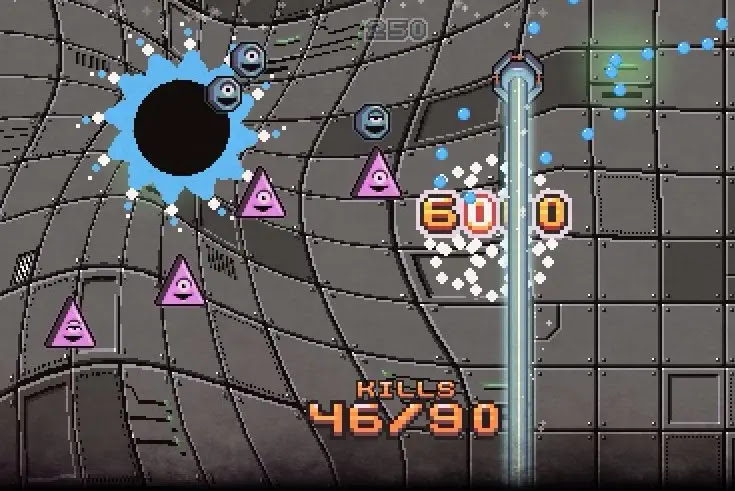
The game plays much like Pacifist mode in Geometry Wars, but your ship has a tail which can take out enemies. Hitting certain enemies with the tail can also charge a laser attack. Once a certain number of enemies has been destroyed, a gateway opens to the next level. One hit and it’s game over, and that’s it.

Control is imprecise, mostly due to the inertia imposed on the player’s craft. The tail follows the path of the ship, dishing out damage on whatever it touches, and there’s a lot to contend with as enemies come in from all sides, helpfully forewarning the player via an arrow indicating which edge they’re joining the arena from. Some pre-planning is required in order to have the ship’s tail waiting for enemies, as one hit will end the game. Sometimes wormholes open to allow more enemies in, but they can be closed by circling with your ship. Occasionally you’ll gain the odd power-up, but it’s just more of the same over and over again, with no draw to pull you back in for one more go.

The pixel art is nice enough and the music is pretty decent, but the whole thing feels like it’s trying too hard to win you over with its style and difficulty. And this is its biggest failing; it just can’t back it up with the gameplay. The taunting triangle after every game over is more grating than playful, and the music is limited to a couple of tracks, so can wear over time.

And that’s basically it. The game feels like a mode within something larger rather than a game in its own right. It features a couple of modes and some multiplayer options, but the whole thing feels like an incomplete thought, and what is there fails to entice the player back for one more go. All in all, it plays like a half-baked attempt at an arcade score attack title, but sadly it has no sting in its tail. Perhaps One-Dimensional Conga Combat would have been more apt as a title.

 Overall 4/10

Monday, 2 October 2023

Full Void Review (Switch)

Indie games certainly go through trends, first everything was Metroidvania and then came the Roguelikes. Now it seems the Cinematic Platformer is the genre of choice. In recent times we’ve had Lunark, Eternal Castle, Library of Bable and remasters of Another World and Flashback to mention a few. Full Void is the next game to take on this approach and, for the most part, it does a pretty good job.

The story of Full Void is told entirely visually. There’s no voice or text so it’s left to the brief cutscenes and general environment to get across the near future world where some form of AI menace has started to enslave humanity and steel away it’s children. You start out running in a forest before heading back into the city as you simply try to survive and escape the ever-pursuing creatures.

The style of the Full Void fits perfectly with down beat colours and a pixel style graphical approach. It gets across the nostalgia of the genre and acts to portray the story and environment well. It also looks very much like its own game and doesn’t take too much from classics in the genre, meaning it is distinctive enough to standout in an ever more crowded market.

 Controls are simple with a two-button scheme which lets you jump or interact with objects. There are no guns or weapons, so you are always vulnerable to enemies and it is very much about keeping away from things. The game responds well so there are few frustrating deaths caused by controls and the checkpoint system is also sensible so when you do die you won’t be repeating huge sections of the game.

The other added bonus is that each death comes with a small cut scene to further emphasise your demise. The only slight blip here is that two or three times (and only two or three times), the story cutscenes turn interactive without warning, often leading to a quick death as you are not expecting it. In one of these you are required to duck, while another requires you to press the interact button to shut a door. These Dragon’s Lair like interaction come so out of the blue and are so inconsistent that you’ll have little chance of surviving them first time which is a shame.

Away from the running and leaping there are also puzzle sections to overcome. This starts out with some simple box moving scenarios and a basic hacking game where you must line up spinning tubes. Before long you’ll acquire a sort of robot thing than can be issued instructions at various control panels. The robot can be used to get through dangerous environments or sent to hard to reach places and then activate switches to make it safe for you to progress. We did find that there were a few too many of these sections and some of them are a bit obtuse but generally our progress was never halted for too long. We aren’t sure the game would lose much without them though.

Full Void is also fairly brief with general play time around an hour. That’s no big deal as such, as the story feels about the right length but there isn’t an awful lot to go back through the game for aside from a few secrets. Once completed the game does let you start from any chapter you like though so you can easily play your favourite sections or seek out a few easter eggs if you wish.

Overall, Full Void certainly works as a Cinematic Platfomer. The look and controls are spot on for this sort of game and the story is interesting and well thought out. The platforming sections work far better than the robot puzzles but there is nothing here that is going to stop you from enjoying the experience. It would have been nice to have more reasons to go back to it after finishing but what’s here is inventive and fun and easy to recommend - as long as you aren’t expecting an epic.

Overall 8/10

Monday, 28 August 2023

Double Dragon Gaiden: Rise of the Dragon Review (Switch)

The Double Dragon franchise has certainly been trying to get back into the mainstream mindset of gamers during the last few years. We’ve had the awesome Double Dragon Neon and more traditional Double Dragon 4 as well as several Technos carts on the Evercade and a collection on the Switch. Double Dragon Gaiden is the first of these games to try and mix the up the formula though.

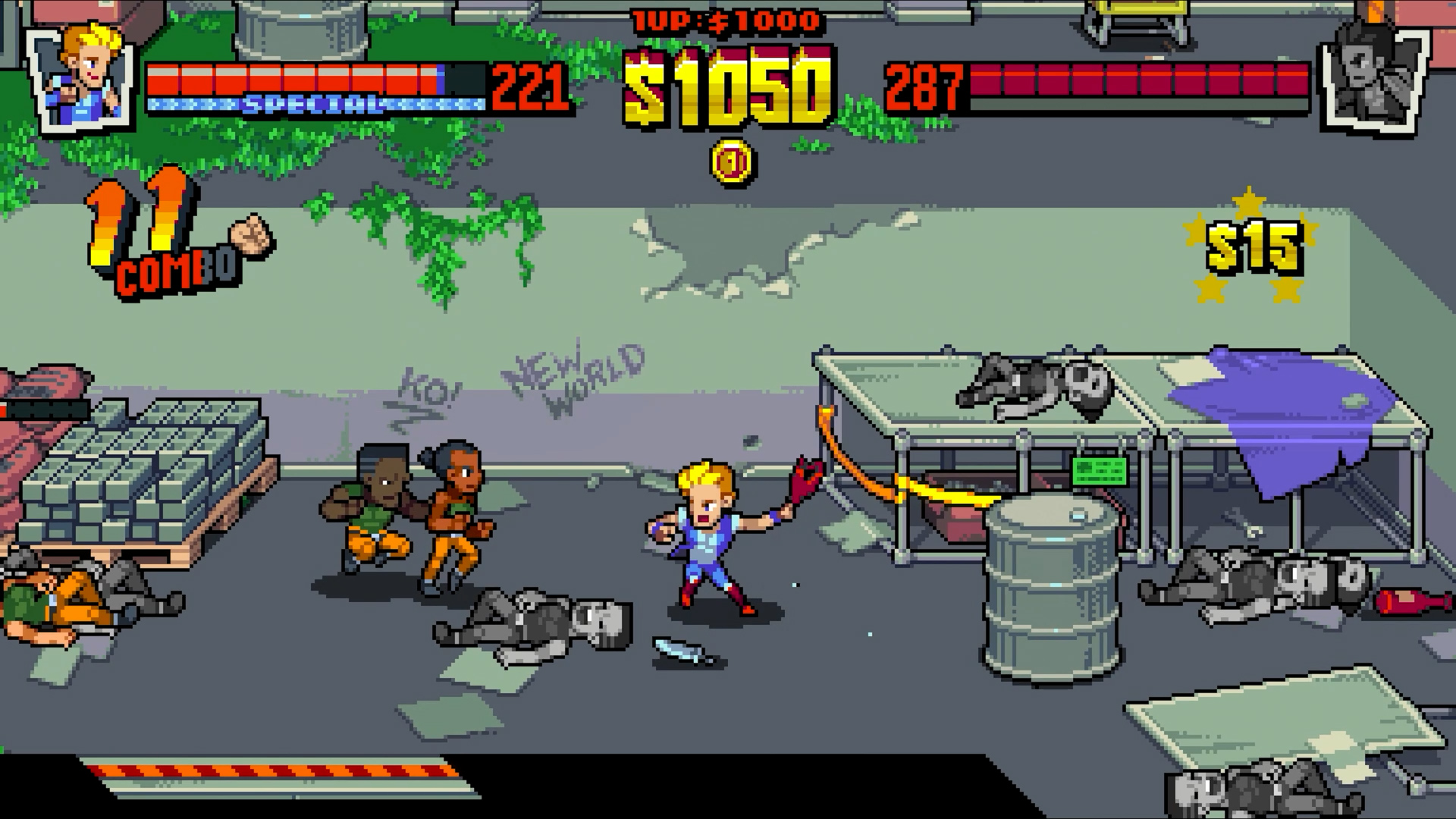
As a result, Gaiden has a more cartoon look to it, closer to the recent Teenage Ninja Turtles game or Scott Pilgrim than what you might normally associate with the franchise. Initially, it’s a bit off putting but soon settles into the madness of the game and fits the overall chaotic style well.

Along with the change in how the game looks extra elements have been added into the core gameplay. The first thing you’ll notice is that a tag team system is in play. You pick two from an initial four characters (more can be unlocked with collectable tokens), with each having their own styles and moves. During play your partner can be tagged in to extend combos or simply give your other character a rest from being pummelled. As well as this, each character also has three special moves which can be used when a meter is filled. Hitting enough enemies with these creates health drops and they prove key to getting through the game.

The next big change is the addition of a few rogue-like elements. You initially have four stages to pick from. Each area has a different theme and boss and can be tackled in any order. However, each level you complete adds another section to the next. So, the first area you take on will lead you straight to the boss, but the next will add another stage and mini boss in between, and then the next area will have two stages and two mini bosses etc. It’s an interesting approach and one that adds some variety to multiple play throughs as it’ll take a good few runs to see everything the game has to offer.

At the end of each area you can buy upgrades with the money collected from bashing the various goons along the way. These range from power ups to specific moves, new skills, tokens or simply taking the money. It’s important to consider what best fits your characters needs as the game gets rough late in the day. Any tokens you collect along the way can be sused to unlock extra features and the boss characters as playable as well, each of which dramatically alters your way of playing.

Overall, Double Dragon Gaiden is a departure from the normal format we have come to expect from the franchise but it’s one that works. If there are any small complaints, it’s that the game can become repetitive at times as it takes a while to get through each run. Over use of the special moves is also an issue as really the best way to get through each level is just to spam and recharge them via enemy take downs. That said this is a vibrant and fun take on Double Dragon and it’s certainly worth checking out for scrolling fighter fans or fans of the franchise in general.

Overall 8/10