Bitmap Books

Friday, 15 November 2013

Disgaea 2: Cursed Memories Review (PS2)


Nippon Ichi has unleashed some of the most obsessively addictive Playstation 2 titles the platform has ever seen. Tactical RPG’s of the highest standard and polished in every tiny detail seem to flow from the developer at will. Now the franchise that stated the European love affair with the team returns with what is possibly the most lavish title of them all, and yet it is also arguably the most accessible.

The wonderfully absurd story revolves around a curse placed on the realm ruled by the Overlord Zenon. Zenon has cursed all the inhabitants of the world and now they have all turned into monsters, except for our dashing hero Adell. Adell’s family (now monsters) try and summon the Demon lord to them but instead end up with his Daughter. From this point on the story goes completely insane as Adell sets off to find and kill the Overlord and lift the curse on the land.

On your journey you will encounter creatures and characters that only the wonderful scriptwriters at Nippon Ichi could possibly create. The story is absolutely ridiculous but in a truly wonderful way and there is so much personality in almost everyone you meet you can’t help but push forward to see what awaits. This game at times is hilarious; you have to wonder what sort of strange twisted genius came up with it.

The action follows pretty much the same flow as before with the player’s team being deployed on a map split into squares. The colour coded squares return- these can be used to create various effects by having different nodes dropped on them. Once destroyed these nodes then cause a chain reaction that will destroy all the coloured squares leading to massive combos.

Crucially and helpfully the way characters gain experience has slightly changed. Before characters gained experience by damaging and defeating enemies. This meant that healer characters and characters that use support magic had to be shoe horned into attacking positions and combo’s in order to stop them falling behind as the warriors in the party level up. Now as well as dealing damage characters gain experience from using skills, so support characters level up in a more natural way.

A number of other features have now been streamlined and improved. The Dark assembly where you must go to create new characters and pass new laws that allow new features is much easier to understand and use. Bonus awards from levels now contain more experience meaning there are far fewer level up walls in the title, which is one of the most welcome additions.

Entering the item world (where you battle through up to one hundred maps to level up items) is much the same as before. Only now it contains more features, such as space pirates, seedy bars, more item specialists and the demon court. The demon court is an interesting though not vital new addition. Here characters can go and be sentenced for crimes they have committed. With each crime the character builds up a criminal record and gains new items depending how bad they have been.

There are a number of new character classes and skills available allowing more customisation for players willing to dig into the near endless depths of the title. Players can create a large number of characters to use but as only a limited number can be placed on a map so it pays to keep groups small as anyone not used quickly falls behind in the levelling up stakes, meaning you have to replay levels to get them up to speed.

 The new option of killing and resurrecting your characters in a new class is interesting. The idea is that if you are lucky characters will keep some or all of their skills from their previous incarnation and now be able to gain the new abilities of the new character class. The game even tells you it is possible to create a character with every skill, should you have the time and the obsessive compulsive disorder to do so. However there is always the very real risk that character will forget some or all of their previous skills leaving you with a slightly stronger but unskilled reincarnation.

As far as tactical RPG’s go there is no company to rival the skill level and passion of Nippon Ichi. It is clear they really care about what they are producing and continually polish their titles to the smallest detail. Disgaea 2 is a little easier than the first game due to the welcome omission of so many frustrating level up walls but still contains stupid amounts of extra things to do which those with any kind of life outside of gaming will never see.

Though easier the game is still fairly long, probably setting in at around fifty hours. Putting a time estimate on how many hours you would need to put into the title to complete everything is both pointless and a little scary to imagine, but we dare say that someone out there in a very dimly lit room will be attempting it. Disgaea is a joy to behold, you can dip into it for a short time or lose several years of your life in a sessions and that is one of the many wonderful things about the title. It is both the most complex and most accessible title in the genre and a must for anyone who is looking for something a bit different, an epic adventure or a life long love.

Overall 9/10


Wednesday, 13 November 2013

Velocity Ultra Review (PS3)


For a long time the PlayStation minis have represented bite sized chunks of cheap fun, ideally suited to the pick and play mechanics offered by first the PSP and then the PlayStation Vita. However, though fun, many have been nothing more than attempts to replicate games often found on the iOS and Android systems. Velocity represented a departure from this and in doing so created a new standard for what can be achieved with a mini.

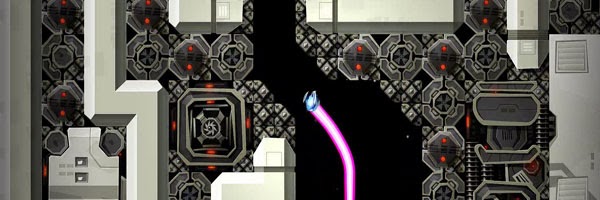
With Velocity Ultra, FuturLab have taken the original game and upped the level of the presentation to try and make it a Playstation 3 game in its own right. What they have managed to create is the greatest vertically scrolling shooter from yesteryear that you haven’t yet played. But to merely categorise it as a shooter is doing it a disservice. At its heart there are so many different mechanics going on that it’s something with much more depth than that.

Each of the fifty levels (plus Bonus stages), requires players to juggle with a number of different objectives. First of all, players must blast enemies and simply servive in classic shooter style. Secondly, there are pods spread around the level containing survivors which need to be rescued and last but not least each level is a deadly race to the finish as a clock continually counts down. As you progress the focus changes in each stage with, for example, a static comic book style screen popping up displaying a message to tell you if you can take your time or need to boost through until the end.

It is within the mix of these games mechanics that things become very interesting. Aside from the usual weapon power ups and bombs your ship can also teleport. The levels often descend into crazy scrolling mazes with dead ends, when this happens you need to teleport into a clear section of the level to continue. Holding the right trigger button also speeds up your craft as it moves up the level. This leads to many levels turning into more of a maze race than a shooter, especially when the time limits are set incredibly tightly.

This would be hectic enough but there are even more fiendish things afoot. At a certain point players gain the ability to drop teleport pods. Sometimes these are infinite and sometimes highly limited in use. This allows the player to teleport back to any one of the pods they have dropped and continue the level from there. The reason you need this is because at higher levels there are complex laser shield defence systems that need to be deactivated. This generally consist of anywhere between ten and thirty colour coded nodes that need to be destroyed in numerical order from lowest to highest. Hit one in the wrong order and the whole grid reactivates.

The nodes are of course spread out all over the levels requiring the playing to bounce back and forth around the map to hit them in the right order. There can also be numerous sets of nodes, all in different colours. Couple this with the continued threat of enemies, the time limit and the need to rescue survivors and everything gets incredibly, addictively hectic. Oh and of course hitting any of the laser shields results in instant destruction.

As well as this there are hidden areas spread around the levels that unlock trophies and further bonus missions. This, along with a tough medal grading system based on your performance means there is a staggering about of replay value in the game. Just in case that isn’t enough for you there is also a complete version of mine sweeper and a few takes on classic games such as thrust hidden away in the extras section.

Velocity Ultra has made the transition from handheld to console remarkably well. The visuals spring to life on HD displays and the music has never sounded better. Velocity Ultra is a must have game but there isn’t anything here that wasn’t in the Vita version, so some may well think twice before buying it again. It’s a shame the title isn’t cross buy, but more of a shame that it doesn’t have cross save functionality. Many Playstation network games now offer up these functions as standard so it’s something we can’t ignore.

We’ve said before that if this had been made on the eight or sixteen bit consoles it would be lauded as an all-time classic. This is still about as essential as you can get and shows an imagination, design level and craft that many of the industries big hitters could learn from. For PS3 gamers without a Vita it’s a must buy, the rest of us might be better looking to Velocity 2X though.

9/10

Tuesday, 12 November 2013

Disgaea 3: Absence of Detention Review (PS Vita)


The Disgaea games are now well known for their massive depth, crazy characters and ability to steal hundreds of hours away from the most dedicated players. Each of the main games has had a version for portable systems and Absence of Detention is the Vita’s debut Disgaea title.

Disgaea 3 follows the story of an Overlord’s son Mao as he tries to overthrow his father. In twisted Disgaea fashion this means that our anti-hero is seeking out how to become a ‘real’ hero as only a real hero could vanquish an Overlord. Queue lots of in-jokes and obscure humour and one very odd script.

The game is set in a demon high school where missing lessons is the right thing to do and anyone who attends class and completes work is treated as the bad kid. Aside from the setting, pretty much everything is here that you would expect. Systems have been changed to fit the high school theme (such as the home room being used to build character relationships and the court to build new characters replaced with the school ‘committee’), but it’s all there and a fair bit of it is now a touch more streamlined.

One of the biggest changes is that you can now buy skills for characters with money rather than wait for them to level up. Characters can also be directly assigned as master and apprentice more easily and relationships can be improved by moving characters chairs together in the home room. It’s a bit strange to start with but does give series veterans something else to play around with and think about.

Battles and levels are pretty much what we have come to expect. You pick your team and fight in a grid based arena until you prevail or the enemy does. It works as well as it always has and the transition to the Vita’s smaller screen doesn’t bring about any noticeable issues. There is a zoom function in place when things get a little small and you can also rotate the battle field which means you can always tell exactly what’s going on.

On initial release on the PS3 there was some criticism of the graphics but we are pleased to say that they look perfectly fine on the smaller Vita screen. There are times when things can be a bit small (especially in the hub areas), but nothing you can’t solve with some simple touch control zooming. Characters and monsters are still easily identifiable and you should always know who is attacking who and with what.

The main draw to go through the Disgaea experience once again is the plot and for those who engage you’ll find a suitably crazy plot with a host of unique and unhinged characters. We wouldn’t say it’s a series highlight but it’s certainly good enough to keep fans going. The biggest problem is that the characters aren’t as likable or interesting as those in other Disgaea games so it becomes more about the battles than the tale being told.

As a starting point for Disagea on the Vita this is a good enough attempt. The few tweaks made to the console game, like the touch zoom, are welcome and the games style fits fairly well onto the system. There are minor issue such as the needing to zoom perhaps a bit more than you should but it’s nothing that derails the experience. If you’re looking for some portable strategy then you won’t find anything with more depth than this. 

Overall 7/10

Monday, 11 November 2013

Teleglitch: Die More Edition Review (PC)


Somewhere in the future, on the edge of a particularly dark area of space is an experimental research facility. Said facility is doing some particular nasty military experiments and now you have woken up and realised it’s all gone to hell. Your only chance is to escape but that isn’t going to be easy.

Teleglitch is an action rogue-like come survival horror title viewed from a top down perspective. Controls are similar to Hotline Miami but it shares none of that games neon tone, instead using a rotten and decaying colour palette designed to inspire feelings of dread and despair as you explore the lonely research outpost.

The games visual style is at first jarring but you’ll soon begin to adjust to the haze of greens and blocky characters. It all begins to take on a certain grotesque beauty and certainly adds to the atmosphere. Sound is the other key component of the game and the outpost hums, bangs and clatters as you explore. Noises are designed to keep you on edge and you’re never quite sure if what you’ve just heard is the station or a monster lurking nearby.

The game follows a pattern of shifting momentum as you move from treating it like The Chaos Engine or Smash TV to running for your life from hordes of mutants and zombies. This change is brought about by what weapon you are carrying and how much ammunition you have left. A few monsters on their own aren’t much of a match for a well-equipped player, but having a few bullets left in a weak gun makes you creep around very carefully, even on early stages.

Teleglitch is a difficult game, something emphasised by the semi-random Rogue like elements of it. Level are randomly generated and randomly populated with monsters. This means you can’t just learn the layout of a level and then dash towards the exit.  It also means that on occasion you will be completely swamped by monsters almost from the off and you’ll need to adjust your strategies quickly in order to survive. Death is permanent and results in starting again from the first level so every move is crucial. There are checkpoints at level five and beyond which allow for a restart from those stages but then where’s the adventure in that? 

Much like games like Spelunky the skill required here is being able to understand what you are up against and react accordingly. Doing this is your best route to survival, though it’s highly likely you’ll still be dashing around looking for the exit with hordes chasing you before long.

The important thing is you always want to dive back into the murky and rotten world. It has the same bite as all the best Rogue-like games and you’ll react with the same joy at finding a useful weapon or despair at opening a door to see hordes of monsters in front of you. You’ll die, a lot, but you’ll always want just one more go.

The other problem that a lot of games in this style face is repetition. Teleglitch does have some issues with regards to re-using environments but there are a wealth of different enemies to take on and a whole lot of different firepower to use as well. This, along with some suitably huge boss type monsters later in the game help to keep things fresh.

Overall, Teleglitch tries to bring something a little different to the Rogue-like sub-genre and succeeds. It may well be going through randomly generated dungeons again but this time there are enough twists and more than enough style to set it apart from its competitors. It’s a hard as nails survive-athon than no fan of the genre should be without and in a crowded market that’s very impressive.

8/10