Bitmap Books

Monday, 17 January 2022

Speed Limit Review (Steam)


Written by Thomas G J Sharpe

At the time of writing, I am hooked back into the moping bleakness of S.T.A.L.K.E.R. Anomaly, and I didn’t expect to find Speed Limit the more frustrating game. Unlike S.T.A.L.K.E.R., Speed Limit tests my patience in a way that I can’t quite express without mashing my keyboard. I don’t appreciate this as I just got it and am looking forward to shedding my finger-skin into its wee crevices. If the comparison between a brutal and harsh FPS survival game and a little Canabalt-like game seem a reviewer’s overreach, you’d be correct. There is something here though about the subjectivity of frustration, and stylish difficulty.

Speed Limit is a pixel-art’d arcade game of getting this little guy through various challenging jumpy, shooty, crouchy, and steering challenges. Starting on a side-scrolling train, you have a gun slapped in your hands by a rough-up lookin’ fella and hordes of SWAT, cops and trenchcoated goons start in pursuit. The action adventure across different modes of transport rollicks on at a whiplash inducing pace, but there are regular checkpoints if you get shot, battered by a barrier, crash your helicopter, take a missile to the face, or fall between two trains. That’s really the measure of the game; timing, rehearsal, memory, and execution until you get it right. Your reward is the feeling of speed and the thrill of a chase. Although this didn’t quite measure up to the legendarily well designed respawns in Hotline Miami, you get back into it fast enough with a little VCR filter flourish. Does this break the sense of chase and flow? A bit. Will you stay engaged after death twenty on one section? I didn’t.

In S.T.A.L.K.E.R., as I sat down to enjoy some Neminoff around the campfire with my NPC apoca-gopniks, I thought of McPixel. You remember McPixel? It had a similar chunky pixel-art design, and an absurdist and humourous approach that Speed Limit is in the same park as. The repetition of McPixel was baked-in and part of exploration. In Speed Limit, it is an inherent punishment to me. So, expect to go back over the few short levels a lot. In bits. Like lots of little rushed quick-time events without the prompts, but really there’s little creativity allowed. Think closer to No Time To Explain. Quick reactions and good situational recall are the loops.

I feel the price (£7.99 on Steam for PC) is about a quid too high, but maybe that’s petty. Players who want a more gawdy and varied Canabalt will find a lot of fun in this exercise in escalation. To return to the frustration, however, I absolutely bounced off of this after the fifth (I think… ) level and watched a video showcasing the final segments. The fifth level is like playing any of the Strike games on rails, which was a step too far for me. I’d had enough. I will guarantee you, however, (without spoiler) that the ending is rather great. But I’ll never see it as a result of my own efforts.

And this all sounds rather negative, but really if you enjoy precision movement, nailing that series of moves, and you like something with a sense of humour, you may well lap this up. After seeing the Door Kickers: Action Squad style art, maybe I wanted more, but it’s just… this. And that’s ok. It’s not for me, but there will be some sadists out there who enjoy this.

And now, excuse me, as I need to go back to an irradiated wasteland where I can be insta-gibbed by ball-lightning, with no hint nor preview, in S.T.A.L.K.E.R.. Because that’s not frustrating at all.

Overall 6/10

Monday, 10 January 2022

Evercade Arcade Cartridges Roundup

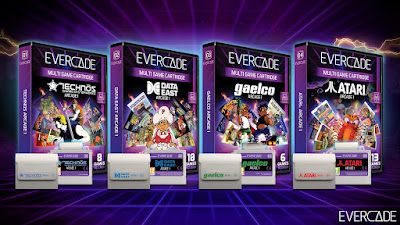
The end of 2021 brought the release of the first Evercade arcade cartridges to the system. Here we look at the initial four releases and see if they can kick start the nostalgia of gathering around a coin op machine with a bunch of sweaty teens.

Technos Arcade 1

Technos is best known for its side scrolling beat’em ups and that is what makes up the most high-profile offerings on this cart. In total eight games are included with Double Dragon 2 and 3 and Combatribes being the signature fighting games. Of these, Combatribes is the most fun and allows for three players to bash skulls together. Unfortunately, the two Double Dragon games don’t stack up as well. DD2 is ok but the third game is a jerky mess. Wrestling game Mania Challenge is also included but is currently broken and unplayable. Once it’s fixed it should be a fun distraction.

Aside from punching people there is a decent Tetris like in Blockout, an average single screen platformer in Minki Monkey and a hard as nails scrolling shooter called Battle Lane Vol 5. None are particularly remarkable unfortunately. Mysterious Stones is an interesting adventure game but often proves too frustrating to be any real fun.

Unfortunately, though the Technos cart looks good on paper the reality is it’s one of the weaker ones available on the system and while the original Double Dragon has performance issues it would still have been nice to see it here.  Combatribes is still great fun in multi-player though so it shouldn’t be completely disregarded.

Atari Arcade 1

The Atari cart takes us back to the early days of arcade gaming with a host of simply yet fun titles. There are thirteen games in total, and many will be familiar to those of a certain age. Arcade icons Centipede, Millipede, Super Breakout and Missile Command are here and are still fun, high score chasing, distractions to engage with. Missile Command is also very much playable without the spinner ball which is good to see. Asteroids is also here - though it’s the original version of the game rather than ‘Asteroids Deluxe’ which is the game it says is included. This is an unfortunate oversight, but it will likely be down to your personal preference how much this bothers you.

Lunar Lander and Liberator seem to have lost some of their original magic now, but they are both still well worth checking out. We can’t see many people spending much time with Night Driver though. Crystal Castles is another solid addition and is by far the best version of the 3D gem collector which is often completely wrecked when it’s been converted to home systems.

There are also a host of great fun multi player games included. The original Pong proves strangely addictive, while Skydiver and Canyon Bomber will see players getting far more competitive than they probably should as they blast blocks and land little parachuting sprites. The standout though is the four player Warlords. Essentially a multiplayer version of breakout players must knock away the shield of their opponents bases while protecting their own. It runs at a breakneck speed and is a lot of fun.

Data East Arcade 1

You get ten games on the Data East cart and all of them are worth playing. Two of the companies most famous games are included in Bad Dudes vs. Dragon Ninja and Sly Spy and both are as fun now as you remember them being. The big chunky graphics and nonstop action mean you’ll likely play them through multiple times. Classic Data East is also on show with Burger Time and Lock ‘n’ Chase providing old school platform and maze action respectively. Both are games that still hold up today and it’s great to see the contrast in Data East’s back catalogue represented.

Both Dark Seal games (Gate of Doom and Wizard Fire) are included as well. Wizard Fire is the better of the two games, but both are solid isometric style beat’em ups with some impressive magic spell effects and monsters to slay.

Shoot’em ups are also represented with Breakthru and Darwin 4078. Breakthru is a fun but brief side scrolling car-based shooter which is strangely addictive. Darwin 4078 is of the vertically scrolling variety and is perhaps the weakest of the games on the cart. That said, it is still solid and well worth spending some time with.

Chain Reaction is a great puzzle game and is basically Magical Drop without the license attached. It works in the same way with shapes needing to be thrown up the screen to make chains that then disappear. We’ve had Magical Drop before on the Evercade but there’s always room for more when the quality is this high.

The highlight of an already excellent package though is Tumblepop. It’s a classic single screen arcade platform game in the truest sense. It’s from the same school as games like Bubble Bobble and Snow Bros and has players sucking up enemies with a vacuum before blasting them back out. The more enemies you can suck up at once then the bigger the projectile you can then shoot back out. You must be careful though as you can only keep the baddies in the sack for a very limited period before they break out and kill you. There’s a wealth of levels here to enjoy and some impressive boss battles as well.

Gaelco Arcade 1

The Gaelco cart only has six games, but this is a real find for the Evercade team. The developer is obscure, and these games haven’t been converted to home systems so many players will be experiencing them for the first time. Glass and Thunder Hoop are the weakest of the games but remain fun. Thunder Hoop is a platform shooter which works well, and Glass is a strange sort of single screen shooter where you must eliminate enemies and blocks. Thunder Hoop does currently have a bug where if you die on level 4 or above it crashes the games unfortunately, but it can be circumvented via save states.

Bio Mechanical Toy is a great Amiga style platform shooter with big graphics and fast paced action. It would fit well on home systems of the time, so this is a real hidden gem. Alligator Hunt is another great fun blasting game in the style of Wild Guns. The Crossshairs shooter is an intense experience and zips along nicely.

Snowboard Championship and World Rally are both examples of great beat the clock racing games. Movement and sense of speed is great, and you’ll be frantically looking for the perfect lines to shave vital seconds off your times. They are both quite tough but also fun and addictive enough to mean you’ll keep coming back to them.

Overall, the first set of arcade carts is a strong showing. The Technos cart is weak but the other three cover a range of arcade experiences and each really highlight fun games that players will want to return to both in single and multiplayer. The biggest issue is that three of the four carts have bugs or curation errors. Some of these are more serious than others and hopefully all will be resolved quickly with updates. Overall though this is a positive start of the Evercade arcade experience.

Monday, 3 January 2022

Broken Sword 5: The Serpent's Curse Review (Switch)


Ah, Paris in the fall. The memories come flooding back as we think about our first experience with the Broken Sword series. Shadow of the Templars was arguably the best ever point and click adventure game so it wasn’t a massive surprise that the games that followed it couldn’t quite live up to it. Both Broken Sword 2 and 3 were both funny and taxing as the series moved from 2D to 3D but then came Broken Sword 4.

We’ve tried to play Broken Sword 4 on three separate occasions to bring our reviews up to date but it is awkward, dull and downright broken in places. But now The Serpent’s Curse is here and the series has returned to its 2D roots and it is so much better for it.

Broken Sword 5 has an air of wiping the slate clean and starting again in terms of design. We now start our game back in Paris, this time in the spring at an art gallery where George is soon reunited with on and off girlfriend Nico. Here a murder takes place and a strange painting is stolen. With George now working as an exhibit insurer he picks up the case to find out what has happened to the painting, who the murderer was and why the gallery owner was killed.

The return to Paris has also seen the series return to the 2D style that worked so well with the first two games. It’s not such a hand drawn look but the graphics are really very nice and keep it traditional while also working exceptionally well in HD and making the game look fit for the PS4. The control system has also reverted back to the ‘dragging a cursor around’ variety and clicking on things with the Switch Joy Cons doing an excellent job of mimicking a mouse.

The game also maintains the series excellent standard of voice acting and scripting with dialogue throughout feeling natural while also maintaining just the right amount of sarcasm and humour. The story itself is strong with a genuinely intriguing mystery to explore with the hints of magical MacGuffin we have come to expect.

One thing we could have done without returning are those tiny objects that require careful scanning of the screen to find. Right from the start there is something fairly well hidden. We weren’t entirely sure if it was colour-blindness that played a part or not but the option to highlight interactable objects would have been a useful addition. It’s a relatively minor point though and at least you know what to expect from games like this.

The actual puzzles are a bit of a mixed bag – though they are designed to stop you backtracking and wandering around multiple locations. Normally when you arrive in a location you can’t leave until the puzzle in the area has been completed. This is good in the fact that it allows you to focus on things with what you have to hand in the confidence there isn’t some tiny object somewhere else that you need. However, it did make us feel a bit penned in at times compared to some of the other games.

Though solid, there aren’t that many puzzles here that will remain memorable. There’s a nice one fairly early on in an art restorers loft but we found little that gave the same high as getting into the docks in Broken Sword 2 or getting the key to access the archaeological dig in the first game. Some of them are a little obscure as well – and not in the ‘use weird object to do thing’ way that these types of games are famous for. There’s also a slight over reliance on things like connecting wire puzzles and shape moving.

Overall, Broken Sword 5 is a solid return to form for the franchise. The mystery is genuinely compelling and the excellent art style and voice acting keep you interested throughout. It’s certainly not up there with the first game but it’s better than both the 3D games and gives Broken Sword 2 a fair run for its money as well. Above all else it’s a proper classic style point and click adventure and we’re glad to see it back.

Overall 7/10

Wednesday, 22 December 2021

Shovel Knight Pocket Dungeon (Steam/Switch)


Written by Thomas G.J Sharpe

The titular shovel-wielding warrior returns in a block-puzzle-rogue-lite hybrid that I found I fell in love with a bit In a tightly designed, densely artistic, and joyful puzzler, Shovel Knight: Pocket Dungeon manages to straddle casual and challenging game types which will cater for a broad range of tastes.

There is something ineffable, something contradictory about the fresh-vintage-ness of the Shovel Knight games. Pulling from a timeless past of games, I’d like to believe the Knight abandoned their post in Link to The Past (as a Hyrule soldier) and made their own weird way in the world. In this latest iteration, there’s the plinky tones of the track “Atropos” playing from Columns, harbinger of the opioid crisis Dr. Mario (not a real doctor), and harpoon propaganda Bust-A-Move. Shovel is stuck in a puzzle-centric kingdom beset by absurd amounts of cracking assets. There is such a bevy of characters, very few lazy blob types, that populate the world that it is genuinely impressive to witness. World-building in such contained venues is a true skill.

These little venues are block puzzles which hurl enemies, pickups, and obstacles onto a grid that Knight has to survive long enough in to reveal an exit. Moving onto an enemy will cause damage to be taken and delivered, forcing tactical movements between enemies and health potions. Chains of similar types will prompt bigger rewards, adding an organisational level to the puzzle. Shops and side routes reveal themselves, chests and additional skills can be accessed for currency and powers. Bosses with unique skill sets appear after a bunch of stages, and the defeated characters are added to a playable roster back at base camp. Each of these knights have a different feel, expanding game approaches and styles. I was reminded of Nuclear Throne, where the characters shape the feel of a repetitive game to something fresh almost every time. Much like Throne, these knights are full of character, from only a few sprite frames and lines of dialogue.

To further bust open this title for all to enjoy there are a bunch of mutators for the difficulty of the game. Set your puzzle handicap and jump in, and it has you hooked. Ordinarily, puzzlers of this ilk with their strategies and mastery summon strict ceilings for me. I resent mastery of systems as a requirement as (what I feel I am) a pragmatic and low-attention player. These game settings help me dial in, more specifically, a way in to enjoy a game that I would otherwise perhaps have bounced off of.

There is something to be said in the actual, and also the impression, of just-making-it. When in the shovelly block-boxes, feeling close to the edge of failure is a big part of the experience for me. And I don’t much care whether it is suited to my ability. Pocket Dungeon is invitational and accessible to me where other puzzle games are clumsier with their delivery, whatever their core loop.

Shovel Knight: Pocket Dungeon is a game that has managed to capture something special for me in the puzzle genre (much like my gushing adoration for the Kingdom Rush series in the tower defence world). There is scope for a casual experience, but also a more devilish time, in an energetic, exciting world that is seeped in a clever and engaging sensibility. And all in a block-puzzle game. A ‘lil piece of fantastic.

Overall 9/10