Bitmap Books

Showing posts with label Dungeon Crawler. Show all posts

Monday, 19 June 2023

Labyrinth of Zangetsu Review (Switch)


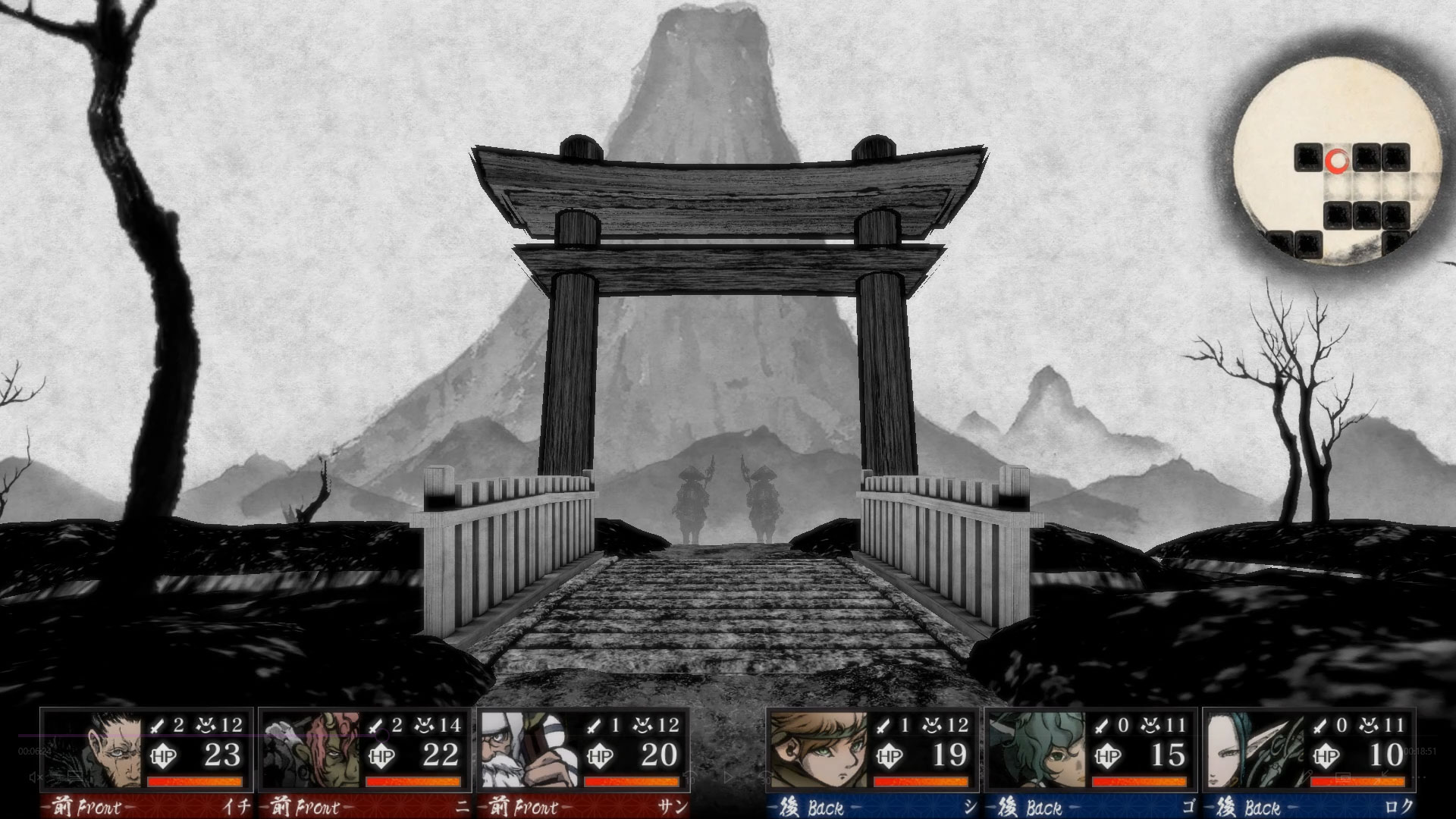
Of the many genres that have seen a revival in the last few years it is fair to say that the 3D dungeon crawler has been somewhat ignored. There have been a few of course, but aside from Etrian Odyssey and Legend of Grimrock there isn’t much that has managed to make an impact with a wider audience. Labyrinth of Zangetsu is certainly trying to standout though with its unique look, which is admittedly what first drew us to it.

When in doubt it’s normally a fairly safe bet to add a Japanese flavour to something. The developers here have bult their world to look like a precession of Japanese ink paintings. The bleak world of black and whites is uniquely and unmistakably set in a land of Japanese folk law with the various monsters and demons from the country making up the monsters to bash. As you move through the world clouds of ink spiral in front of you and serve as your warning that a battle is about to begin should you venture forward another step.

It all looks gorgeous in its grim way and the different environments and monsters are beautifully recreated out of the thick inky black lines and empty whites of the intentionally limited colour palette. It is perhaps a touch of style over content but then it kept us interested far longer because of it and made the dungeons seem so much more interesting than the usual brown blocks of games like Eye of the Beholder.

Away from the aesthetic, the game plays in much the same way as other dungeon crawlers. You move around in a first person view one square at a time disarming traps, searching for keys and encountering monsters. Combat is turn based and each of your team of six has various options depending on their class such as attack, using magic, items, stealing etc. You can decide if you want characters to be at the front or back of the group but generally your options are limited. It follows a standard template so if you’ve played one of these games before you’ll know what you are getting.

Should one of your team die you can try and resurrect them once you are back on safe ground but there is a chance they will turn to ash. When this happens, you’ll need to role another character before exploring again which can be frustrating if you’ve put a lot of time into a certain class. Another thing that makes your journey tricky is that characters only level up when they are back in a town or village. This means you could be out in the wilderness a long time and no matter how many beasts you slay you’ll remain the same level until you return home.

Overall, Labyrinth of Zangetsu is a beautifully atmospheric and wonderful looking game that has standard gameplay underneath it. If you are into dungeon crawlers there’s certainly something here to get into but it lacks the more general appeal of the Etrian Series with all its bells and whistles. We enjoyed our time with the game though and for some a refresh of the setting and a change of the art style will be enough to make the adventure worth undertaking.

Overall 7/10

Monday, 6 March 2023

Rogue Legacy 2 Review (Switch)


Way back in 2013 we got our first take of Rogue Legacy. Now, some ten years later the sequel has appeared so it seemed we ought to dive into the ever changing castle once more and see how it holds up. It’s still very much a randomly generating and highly difficult game of exploration, loot and beasties. And who would want it any other way?

Right from the start it’s clear that Rogue Legacy has much more going on than many of the other Rogue-like games of recent times. You start off with your hero entering a castle from a 2D, side on perspective and then proceed to hunt around for treasure and the boss monsters that guard each area. When you die your offspring must then take up the reigns and continue the search.

The continual line of offspring randomly generate into a number of predetermined classes. There are mages, knights, lancers and others which can then be expanded out into more specialist explorers such as the gunner and assassin. Each class has its own strengths and weaknesses and different weapons and traits that it uses.

You get to pick from three randomly created characters at the start of each adventure and these can be in any of the classes you have unlocked so far. Each individual then also has traits which give them their own strengths and weaknesses. There are a massive amount of different traits and these range from things like Gigantism (makes your character bigger), to dyslexia (can’t read signs) and things such as having an affinity with magic or boosting your speed. There’s no real way to know what you’re going to get so you need to adjust your play style accordingly.

Everything in terms of unlocking or levelling is done with the gold you find around the castle. This can be used to up your stats, buy new equipment or unlock the specialist classes. Upon your death any money or equipment you have is passed onto your next character to use and spend. The kicker is that any money left over after upgrading then needs to be given to the ferryman in order to be let back in. This can create a cycle of not getting very far as you don’t quite find enough to upgrade while being out matched by the difficulty.

Rogue Legacy 2 is certainly not here to treat players with kid gloves. It takes a good few hours to get to grips with and to actually feel like you making progress. Unlike the first game, gold is not the only way to level up so at least you will get something for the all the monster bashing being done. Certain objects and unlocks stay in place as well so while progress can be slow it will come with persistence. There is also a massive amount of tinkering you can do with the ‘house rules’ if you find yourself hitting s brick wall. This allows players to change health, damage and many other things to help make progress easier – should you wish.

Though the castle is randomly generated you can use the architect to lock it down. For the price of a percentage of your gold this keeps the room layout the same and allows you to use the teleport squares you may have found to get you right back into the action. The main benefit of this is when you discover a boss. Bosses are fierce and difficult and will require a number of goes to get the better of. If you decide you character is strong enough then getting the castle locked down allows for repeated characters to simply teleport right to them for another go. Once a boss is downed they stay dead for good.

It’s fair to say this isn’t going to be a game for everyone. It very tough, especially at the beginning and you will need to sink a load of time into it to get you to a point where you feel safe to explore properly. Alternatively, you can of course play around with the house rules. Once you level up a bit and get used to the game it really does start to get going and you’ll be continually drawn back for more. However, many gamers might not make it that far and that’s a shame as this is probably one of the more inventive games of it’s type.

Approach it patiently and with the knowledge that you are going to die and it offers an experience among the best in the genre. It’s a must for fans of the Roguelikes but the more casual gamer should probably get their kicks with something a little easier to handle.

8/10

Wednesday, 26 November 2014

Icewind Dale Enhanced Edition Review (PC)


Written by Thomas G.J Sharpe

This must start with a huge disclaimer. Firstly, I am not a seasoned Dungeons & Dragons player. The only time in real-life that I have dipped into that realm, my behaviour was a mixture of gentle subversion and flippancy, but also tinged with the excitement of making stuff up on the spot. To summarise, I didn't care for the rules too much. Secondly, role-playing games on PC aren't my poison of choice though I got a fair few hours out of Baldur's Gate 2 and Fallout 2 especially.

So, how indeed do I expect to shed any worthwhile light on Icewind Dale: Enhanced Edition, seeing as I haven't even played the unenhanced edition. Simple, I dragged my cohort Dan O'Shea, seasoned role-player in and picked his more experienced brains. We made some characters, slapped them in a party and had a jaunt around the Spine of the World.

At first glance, I was nostalgic. The sprites brought back memories of Baldur's Gate, and this led me to wonder aloud whether there had been much change visually. Dan noted that not much had. He seemed to be pleased with the ability to zoom in and out with the mouse wheel. The backgrounds are well rendered, character animations are simplistic, but functional. On further play, however, it seemed to us both that most of the enhancements had come in the form of sleekness of interface, features and interpretation of the various (so Dan noticed) D&D rule-sets.

From my perspective, without prior experience of the original, I still find the manner of this particular brand of RPG off-putting. It certainly helped seeing how Dan chose to attribute ability points in a way that made sense in terms of the mode of the game. I have always struggled with this more archaic character creation, preferring a more emergent character through play. I was surprised, however, how attached I became to my character (a gnome assassin-thief), and how much I wanted to carry on playing. The main quest is linear, but there seemed to be dotted side-quests here and there. The real nitty-gritty comes in load-outs, abilities, party balance and experience.

Little additions, such as more clear character identification rings, a very convenient mass-pick up loot bar and more elegant HUD, pleased the veteran player. I found some of the symbols familiar from Baldur's Gate, but there isn't a huge amount of help available for the novice. It is in the tradition of taking your time, immersing yourself in the world and enjoying the journey. On the way, the interface becomes second nature. What helped my understanding of the statistics was the (so Dan noted) clear, “show yer working” calculations for the characters. So I could follow why my charisma was at the rating it was at. On more aesthetic notes, I love the artwork of the cutscenes and the music is spot on. I'd recommend getting some custom avatar pictures and your own vocal sound. Well, I certainly will when I restart without a chaperone.

It is hard to predict the appeal of this. On one hand, fans of the original may get a big kick out of the extended main quest, squashing of bugs and more elegant presentation. Beamdog have done a good job of updating in lots of ways, despite Dan not immediately being blown away. It is clear to see that these classic role-playing titles can benefit from a little buff, here and there, but the guts of the engine and design still hold up well. I was pleasantly surprised with my first go, and look forward to another bash. Maybe it's time I learnt some patience.

7/10

Wednesday, 21 May 2014

Demon Gaze Review (PS Vita)


The Vita is fast becoming the platform of choice for both developers and players who want a slice of JRP action in their lives. Demon Gaze continues this trend and also adds to the recent resurgence of games taking on the first person dungeon crawler genre. It’s bright and colourful, it’s got questionably drawn female characters and it’s absolutely hard as nails.

You awaken in a basement without knowledge of who you are. You are quickly thrown into a battle with a demon. After defeating it you find out you are a Demon Gazer with the ability to capture strong demons and harness their abilities. You then have to venture into the worlds many dungeons to find more foes to defeat and hopefully find out all those things you can’t remember. We’ve been here before with the story certainly but there are numerous twists and turns along the way to keep this one interesting.

The game is split into two different sections. First of all you have the inn. Here you can talk to NPC characters, accept quests and stock up on gear and weapons. You can also revive fallen characters and just about everything else we have come to expect from this type of game. You rent a room and every time you return from the world you have to pay up. If you can’t afford it the mysterious girl running the place will let you off but you’ll lose out on bonuses and some facilities won’t be open to you. 

In order to venture into the world you have to build a party. Starting with just one member, each time you want to add someone you have to rent them a room. It’s expensive but worthwhile as you won’t be getting far without a full complement of heroes. The dungeons in Demon gaze are tough and you’ll be hammered early on if you don’t keep an eye on what you’re doing. Perhaps more than any other game in recent times you really need to keep on top of your skills and how different status effects work. Mastering the elemental strength and weaknesses of attacks is also key to survival.

Dungeons are grid based and the game will auto map for you as you progress. The aim is to find demon circles. Placing gems on the circles will someone monsters and once defeated you will take control of the circle. The circle can then be used to save and change equipped demons while placing gems with different properties will alter the items dropped by slain foes. You’re real aim is to control all the circles in a given area as this makes the lord demon of the realm appear. Defeating the lord demons binds them to you and also progresses the story.

You can only have one demon tied to you at any one time and they all have their own styles and advantages in the over world and combat. For instance, one demon will let you walk on lava, allowing you access to previously unreachable areas, while another makes hidden doors glow. Most are also tied to a particular element such as earth, fire or darkness and thus are best employed when dealing with a lord demon weak against that element. Be warned though, these demons are seriously tough. Battles can rage for a long time and if you die it’s straight back to the title screen.

Combat is turn based and happens randomly as well as when you walk into certain symbols in dungeons. It’s fairly standard stuff except for the inclusion of being able to unlock a demon to assist you. When summoned, the demon will act independently to help you while a timer ticks down each turn. If you don’t lock the demon back away before the timer runs out it will go into chaotic mode and start attacking the party as well. More turns are gained by defeating enemies and demons also level up and become more loyal as you progress.

Despite the difficulty the game is also incredibly rewarding. Every time you venture that bit further it feels like an achievement and your characters learn new skills every few levels or so. It may require a bit of grinding to break the back of the difficulty curve but it’s a game well worth sticking with.

Overall, Demon Gaze is another excellent addition to the dungeon crawling genre. It’s certainly not a game to cut your teeth with but for those versed in the ways of turn based combat and elements it’s a worthy and challenging adventure to undertake.

Overall 8/10

Monday, 30 September 2013

Rogue Legacy Review (PC)


There has been a load of new dungeon based games recently, each with their own take on searching castles and dank caves for loot. Rogue Legacy takes much of its inspiration from the castle based Castlevania games and uses this as a template to build another randomly generating and highly difficult game of exploration, loot and beasties.

Right from the start it’s clear that Rogue Legacy has much more going on than many of the other Rogue-like games of recent times. You start off with your hero entering a castle from a 2D, side on perspective and then proceed to hunt around for treasure and the boss monsters that guard each area. When you die your offspring must then take up the reigns and continue the search.

The continual line of offspring randomly generate into a number of predetermined classes. There are mages, paladins, thieves and others which can then be expanded out into more specialist explorers such as the shinobi and miner. Each class has its own strengths and weaknesses and different weapons and traits that it uses. For instance – the shinobi deals high damage but can’t create a critical hit, while the paladin is a good all-rounder and has the use of a shield.  

You get to pick from three randomly created characters at the start of each adventure and these can be in any of the classes you have unlocked so far. Each individual then also has traits which give them their own strengths and weaknesses. There are a massive amount of different traits and these range from things like Gigantism (makes your character bigger), to dyslexia (can’t read signs) and things such as having an affinity with magic or boosting your speed. There’s no real way to know what you’re going to get so you need to adjust your play style accordingly.

Everything in terms of unlocking or levelling is done with the gold you find around the castle. This can be used to up your stats, buy new equipment or unlock the specialist classes. Upon your death any money or equipment you have is passed onto your next character to use and spend. The kicker is that any money left over after upgrading then needs to be given to the gate guard in order to be let back in. This can create a cycle of not getting very far as you don’t quite find enough to upgrade while being out matched by the difficulty.

Rogue Legacy is certainly not here to treat players with kid gloves. It takes a good few hours to get to grips with and to actually feel like you making progress. As gold is the only way to level up you will often find you need to very cautiously go on expeditions just to gather enough of the stuff to get you to the next piece of equipment or upgrade and this can be time consuming.

Though the castle is randomly generated you can use the architect to lock it down. For the price of a percentage of your gold this keeps the room layout the same and allows you to use the teleport squares you may have found to get you right back into the action. The main benefit of this is when you discover a boss. Bosses are fierce and difficult and will require a number of goes to get the better of. If you decide you character is strong enough then getting the castle locked down allows for repeated characters to simply teleport right to them for another go. Once a boss is downed they stay dead for good and once the initial four bosses are defeated this allows access to the final area of the castle.

It’s fair to say this isn’t going to be a game for everyone. It very tough, especially at the beginning and you will need to sink a load of time into it to get you to a point where you feel safe to explore properly. The fact the rooms move around all the time makes it seem a slightly odd decision to base it on the Castelvania template and it can be very frustrating to realise you’ve just wandered into the castle without locking it down, especially if you were heading off to fight one of the bosses. That said, it does carry the same sort of risk reward scenario as games like Dark Souls and every victory feels that much sweeter when you’ve been trying to take the monster down for hours. Once you level up a bit and get used to the game it really does start to get going and you’ll be continually drawn back for more. However, many gamers might not make it that far and that’s a shame as this is probably one of the more inventive indie style games to come out recently.

Approach it patiently and with the knowledge that you are going to die and it offers an experience not really offered elsewhere. It’s a must for fans of the genre but the more casual gamer should probably get their kicks with something a little easier to handle, much like Dark Souls or other Rogue-likes like Spelunky.

8/10

Monday, 23 September 2013

Diablo III Review (PS3)


There’s been a recent trend of dungeon crawlers making their way onto consoles and no name looms larger in the genre than that of Diablo. Launching on PC last year, this behemoth of a title has now been reworked for consoles in the hopes of coaxing in a crown not so familiar with the combination of mouse and keyboard.

We need to say right at the start that we aren’t familiar with how the game played on the PC. The review will focus on the games strengths and weaknesses in its current form and how it comes across on console as we can’t keep comparing back to what has or hasn’t changed from its first iteration. That said, we have played the Diablo series before so we aren’t coming at it from the point of view of a complete newcomer.

For those not familiar with the series the game is a hack and slash style dungeon crawler with a slanted top down perspective. The plot revolves around a great evil rising from the depths and needing to be destroyed. It’s standard fantasy folk lore set in a dank and forbidding setting and the whole thing oozes with atmosphere and the feeling of dread and decay.

Starting out you have to pick from one of five classes such as a Demon Hunter or Witch Doctor. These classes are fresher takes on the classic classes of Archer, Warrior, Priest, Mage etc. There is no dice rolling to be done and after you’ve picked from several avatars it’s straight into the game. As you destroy monsters and complete quests you level up and this opens up skills slots which can be customised with a wide range of new powers.

Even for those new to this type of game you will pick up what to do pretty early on. The interface is slick and everything is made very clear about what it does when equipped. The same can be said for equipping armour and weapons as a handle compare button allows you to quickly see what benefits each piece of gear has. Picking up a new piece of year for a slot with nothing in will also see the item automatically equipped. In the field of battle you have to press a button to pick up gear but gold or potions are picked up automatically by walking over them.  It’s hard to think how the game could be streamlined anymore and results in a slick and enjoyable experience.

The range of enemies you come across are both varied and plentiful and even at the start you will need to think carefully about how you are going to approach the hordes. On the easier difficulty settings there is no real downside to death but as the difficulty and settings ratchet up you cane even go into the fray knowing one death will end your adventure for you. The settings allow for the sweet spot of any adventurer to be found and it adds hours of replay value as well.

One of the downsides with this type of game is that after a while the combat can feel a bit samey. Though there are a wide range of weapons, powers and enemies to keep things ticking over you do end up performing the same cycle of hit, run and heal more often than you may perhaps like. That said this is by the far the best example of the genre we have come across on a console and it allowed for long periods of play before the feeling of repetition set in. it’s certainly a cut above the Baldur’s Gate hack and slash console games of a few years ago and those were very well received.

Much of the strength of the game comes from venturing into dungeons with friends. There are a host of options available to help with this and you can have strangers join your game as well. The more players in the game means the tougher the monsters get but it really allows Diablo to come into its own when you have multiple classes all trying to take down a giant beastie. In single player you can recruit companions of different types as well. You’ll need to do this early on or simply find yourself overwhelmed by the sheer amount of monsters coming after you.

Overall, this is about as good as we can see a hack and slash style dungeon crawler getting on a console. It’s incredibly user friendly and lends itself to long stretches of play. All the skills you pick up offer genuine benefits and options and there are a huge range of monsters to slay and loot to plunder. It has as brooding atmosphere and a feeling of grandeur that many a console game would kill for. Basically, if you like dungeons crawlers this is essential and if the genre hasn’t hit the right buttons for you yet then this might be the one to change that.

9/10